
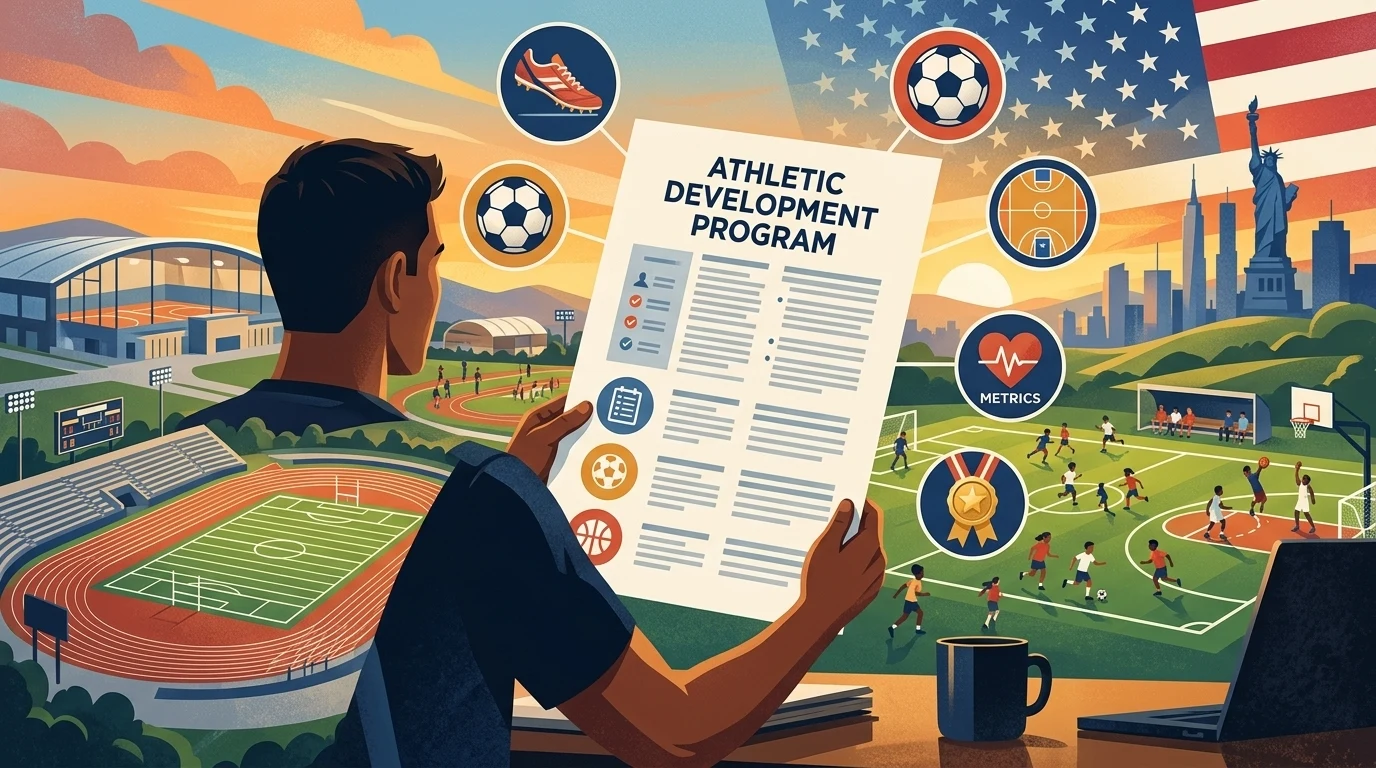
In the largest non-governmental investment in community athletic infrastructure in American history, the United States Olympic & Paralympic Committee (USOPC), in partnership with a coalition of twenty-five major metropolitan mayors and prominent philanthropic endowments, announced the launch of the National Youth Sports and Athletic Access Initiative. Backed by five hundred million dollars in committed endowment capital, the multi-decade program is dedicated to eliminating financial barriers for youth sports participation, modernizing municipal recreational facilities, and establishing inclusive athletic talent pipelines in the lead-up to the 2028 Los Angeles and 2032 Brisbane Olympic Games.
Civic leaders and pediatric health advocates highlighted that the initiative directly targets the escalating affordability crisis in American youth athletics, where commercialized travel teams and rising facility fees have systematically priced millions of children out of organized competition. By funding free municipal leagues, certified coaching clinics, and neighborhood athletic facility rehabilitations, the initiative aims to restore universal youth sports access across urban, suburban, and rural communities nationwide.
Infrastructure Revitalization and Community Athletic Facilities
Over half of the initial capital commitment will be deployed directly toward upgrading aging public parks, high school athletic complexes, municipal swimming pools, and indoor community recreation centers. The initial phase will fund comprehensive renovations across sixty high-need urban parks in cities including Detroit, Philadelphia, Atlanta, Chicago, Phoenix, and Los Angeles, installing all-weather synthetic turf fields, modern energy-efficient LED lighting, and accessible facilities for Paralympic track and field programs.
To maximize community longevity, municipal parks departments will receive long-term maintenance endowments that guarantee turf refurbishment, equipment replacements, and public locker room maintenance without straining local municipal property tax budgets. Furthermore, regional sports hubs will be equipped with specialized timing systems and athletic testing equipment, allowing local recreational programs to host sanctioned state and regional championship tournaments.
Democratizing Athletic Talent Identification and High-Performance Pipelines
Beyond broad public health and physical literacy objectives, the initiative establishes an open-access talent identification network designed to discover and nurture prospective elite athletes regardless of socioeconomic background. Historically, sports such as gymnastics, swimming, fencing, and rowing have been heavily gatekept by private club tuition costs exceeding tens of thousands of dollars annually per child.
Under the new framework, National Governing Bodies (NGBs) for Olympic sports will establish free regional scouting academies hosted at municipal recreation centers. Selected junior athletes will receive comprehensive scholarships covering equipment, high-performance coaching, physical therapy, and travel accommodations for national qualifying competitions. Certified coaches will also undergo rigorous safe-sport training and trauma-informed instruction protocols developed in collaboration with leading sports psychology institutes.
Long-Term Societal Dividends and Public Health Impact
Epidemiological researchers and public health economists emphasized that the societal returns on youth sports investments extend far beyond medal podiums. Regular adolescent athletic participation is strongly correlated with improved academic performance, reduced teenage depression rates, and lower lifetime chronic cardiovascular disease incidence. By lowering structural barriers to sports, the initiative is projected to engage over two million previously inactive American youth over the next five years.
As ceremonial groundbreakings commence at neighborhood community centers across the country, the National Youth Sports Initiative represents a visionary redefining of American athletic culture—ensuring that every child, regardless of postal code or family income, has the opportunity to experience the joy of play, teamwork, and the pursuit of athletic dreams.
How this account was assessed
This explainer is built from an attributable source set rather than anonymous aggregation. The references used for the current version are: USOPC Official Press Releases and News; National Recreation and Park Association Research. Each source has a different evidentiary role. A public record can establish what an institution filed or announced, while independent reporting can add chronology, interviews and context. Neither should be stretched beyond what it directly supports.
What the sources can—and cannot—show
The first step is to identify the controlling fact in every paragraph: a date, action, quotation, measurement or procedural status. That fact should be traceable to a named record. Statements about motive, cause or future impact require separate evidence and should not be inferred merely because two events occurred close together. Early official information can also change. Preliminary findings, emergency statements and initial court or agency summaries should be described as preliminary until the complete record is available.
A source’s existence is not proof of every detail in a story. Readers should check whether the linked page actually contains the quoted language or number, whether it covers the same time and place and whether a newer version has replaced it. When several reports all depend on the same original statement, they count as multiple publications but only one evidentiary origin.
Reading chronology and numbers carefully
Dates should be read in three layers: when the event happened, when the information became public and when this post was last reviewed. Keeping those moments separate prevents a later update from being projected backward. Numerical claims need the same discipline. Confirm the unit, denominator, comparison period, geographic scope and whether a figure is seasonally adjusted, inflation adjusted, estimated or final. A percentage change without its starting value can exaggerate practical significance.
Independent checks for readers
Readers can reproduce the basic review by opening each reference, searching for the central names and dates and reading beyond the headline. For government or court material, find the docket, order, transcript or downloadable dataset. For company statements, compare the announcement with a filing or regulator’s record when one exists. For scientific or technical claims, prefer the underlying paper, protocol or evaluation and check whether outside specialists have examined the method.
Why this context matters
The initiative tackles the pay-to-play barriers in American youth sports while promoting adolescent mental health and physical fitness. Authority comes from showing the path from evidence to conclusion, not from confident tone. That is why this post keeps reference links visible, states the limits of the available material and avoids treating an unresolved question as settled.
What to watch next
First municipal park groundbreaking ceremonies, regional scouting academy schedules, and youth league registration metrics. A useful update should name the new record, summarize the change and explain whether it confirms, narrows or contradicts the earlier account. If a correction changes a central fact, the correction should remain visible instead of being silently folded into the text.
This process does not eliminate uncertainty; it makes uncertainty legible. Readers should leave with a clear understanding of what is documented, what is attributed, what is analysis and what still requires evidence. That separation is the foundation of a durable, useful blog post.
References and further reading
Documented from USOPC board releases, municipal mayoral press announcements, and sports philanthropy endowment charters.