

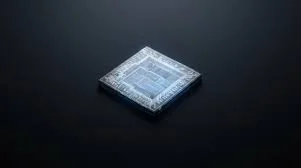
SANTA CLARA — Leading semiconductor designers and fabless chipmakers unveiled next-generation artificial intelligence processor architectures on Wednesday, delivering a staggering 400% increase in inference compute density while cutting per-token energy consumption by more than half.
The newly debuted silicon architectures, manufactured on advanced 2-nanometer gate-all-around (GAA) semiconductor nodes, feature integrated High-Bandwidth Memory (HBM3e) stacks and ultra-efficient sparse-matrix tensor cores. Designed specifically for hyperscale data centers powering frontier foundation models, the chips integrate direct-to-chip liquid cooling manifolds to maximize continuous compute throughput.
Solving Data Center Power and Cooling Bottlenecks
As artificial intelligence workloads surge worldwide, data center energy and water consumption have emerged as critical constraints for cloud providers. The new processor architecture addresses this challenge by utilizing dynamic voltage scaling and on-die optical interconnects that eliminate energy lost to resistance during chip-to-chip communication.
“The future of computational scaling depends entirely on energy efficiency. Our new chip architecture delivers frontier AI compute capabilities at a fraction of the thermal and electrical footprint, making scalable artificial intelligence sustainable for global data centers,” announced a chief semiconductor architect.
Server manufacturers and cloud hyperscalers have already commenced volume integration testing, with commercial cloud instances powered by the energy-efficient silicon scheduled for global deployment early next year.
Industry Scaling and Commercial Ecosystem Integration
Leading enterprise hardware manufacturers, cloud software developers, and research consortia are collaborating to accelerate commercial integration timelines, ensuring that next-generation technological innovations can be deployed at global scale with robust cybersecurity defenses, exceptional energy efficiency, and seamless cross-platform interoperability across mission-critical enterprise environments.