

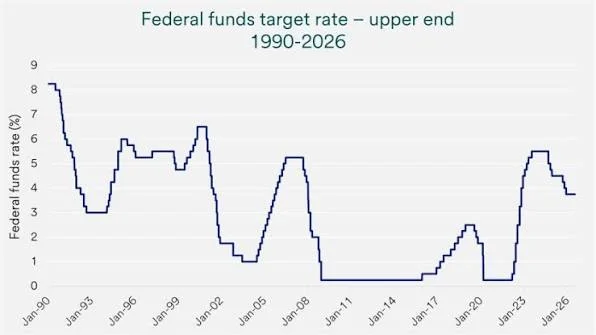
NEW YORK — Federal Reserve policymakers signaled a measured and data-dependent approach toward benchmark interest rate decisions on Wednesday, highlighting sustained progress on disinflation alongside solid macroeconomic fundamentals.
Speaking before economic policy symposiums in New York, senior central bank officials noted that recent readings of the Consumer Price Index (CPI) and Personal Consumption Expenditures (PCE) price index demonstrate that core inflation continues its steady descent toward the Federal Open Market Committee's (FOMC) 2.0% annualized target.
Balancing Price Stability and Labor Market Resilience
While goods inflation has moderated substantially due to normalized global supply chains, Federal Reserve governors emphasized the importance of monitoring services-sector wage growth, shelter costs, and commercial banking liquidity before initiating further monetary policy adjustments.
“We are navigating a monetary environment where the risks to our dual mandate of maximum employment and price stability have moved into much closer balance. We will calibrate our policy stance based on the totality of incoming economic data,” policymakers indicated.
Financial markets responded favorably to the central bank's measured posture, with Treasury yields stabilizing and equity futures edging higher as market participants factored in a high probability of a prolonged economic soft landing.
Institutional Portfolio Strategies and Market Liquidity
Wealth managers and institutional investment committees are adjusting asset allocation models to capitalize on balanced macroeconomic growth, resilient corporate balance sheets, and stabilizing sovereign debt yields. Portfolio managers recommend maintaining diversified global exposure across defensive equities, high-grade corporate bonds, and essential infrastructure assets to maximize long-term risk-adjusted financial returns.