
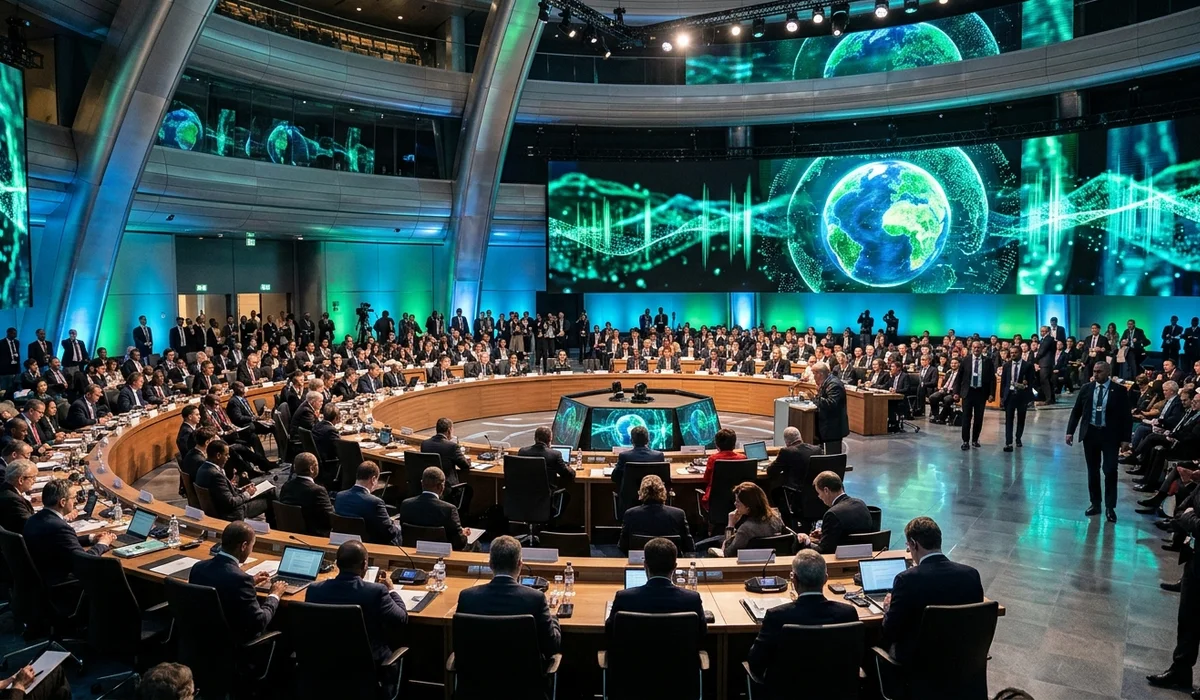
BAKU, Azerbaijan — Following nearly two full days of marathon, sleepless overtime negotiations that repeatedly threatened to collapse into diplomatic chaos, delegates from nearly 200 countries gave final approval early Sunday morning to a contested new climate finance framework at the COP29 United Nations Climate Conference in Baku.
Under the final treaty, officially termed the New Collective Quantified Goal (NCQG), wealthy industrialized nations agreed to take the lead in mobilizing at least $300 billion per year by 2035 to help developing countries transition away from fossil fuels, construct renewable energy grids, and fortify infrastructure against increasingly lethal climate disasters. The target triples the previous, long-criticized $100 billion annual commitment established in 2009.
A Bitter Plenary Clash and Developing Nation Fury
Yet the adoption of the agreement was marked by unprecedented acrimony rather than triumph. Developing countries, least developed nations, and low-lying island states that contributed least to historic atmospheric emissions reacted with deep indignation, arguing that the headline figure represents a fraction of the $1.3 trillion in external finance that independent UN economic panels estimate is urgently required each year to avert catastrophic ecological breakdown.
In a dramatic sequence during the final plenary session, the representative of India, Chandni Raina, stood up to forcefully denounce both the substance of the agreement and the procedural gaveling of the presidency. Raina accused conference organizers of silencing objections from the Global South and pushing through a substandard deal without genuine consensus.
'This goal is too little, too late. It is an optical illusion that fails to meet the scale of the challenge we face,' Raina told the plenary chamber to widespread applause from civil society groups. 'We are deeply disappointed by this unfair outcome. This document does not address our urgent needs; it is a paltry sum that insults the suffering of frontline communities.'
Representatives from the Alliance of Small Island States (AOSIS), which represents dozens of low-lying island nations facing existential sea-level rise, briefly staged a walkout during the closing hours, decrying what they called a gross abdication of moral and financial responsibility by the world's historic carbon polluters.
Mechanisms of the $300 Billion Target
The Baku agreement also sets a broader, non-binding aspirational objective for all public and private sources to scale up climate financing to $1.3 trillion per year by 2035. However, European Union negotiators and the outgoing United States delegation, led by White House Senior Advisor John Podesta, stood firm during the talks, insisting that domestic fiscal realities and ballooning sovereign debt burdens made a larger direct taxpayer-funded grant commitment impossible.
Consequently, the $300 billion annual envelope will not come entirely from direct bilateral foreign aid grants. Instead, it relies heavily on blended finance: leveraged loans from multilateral institutions such as the World Bank, private capital mobilizations, development guarantees, and international carbon credit trading under newly approved Article 6 market mechanisms.
Critics contend that relying heavily on loans will plunge climate-vulnerable African and Asian nations into even deeper sovereign debt distress, forcing them to divert scarce public health and educational budgets toward servicing international climate loans.
Shadow of the Incoming U.S. Administration
Looming heavily over every hour of the Baku negotiations was the imminent return of Donald Trump to the White House. With Trump having repeatedly pledged to withdraw the United States from the 2015 Paris Climate Agreement once again and dismantle international climate aid contributions, European negotiators operated under acute anxiety that Washington's withdrawal will leave an immense funding vacuum.
Despite the bitter disagreements, UN Climate Change Executive Secretary Simon Stiell defended the hard-fought compromise as an indispensable safeguard for international multilateralism. 'This agreement will keep the clean energy boom growing and protect lives,' Stiell said in his concluding address. 'No country got everything they wanted, and we leave Baku with an enormous mountain of work still to do. But this deal ensures the financial architecture remains intact as we fight for humanity's future.'


Reader Discussion (0)
Only registered and logged-in readers can post comments.
Sign in with your account or create a free profile in seconds to join the conversation.
Loading discussion...