
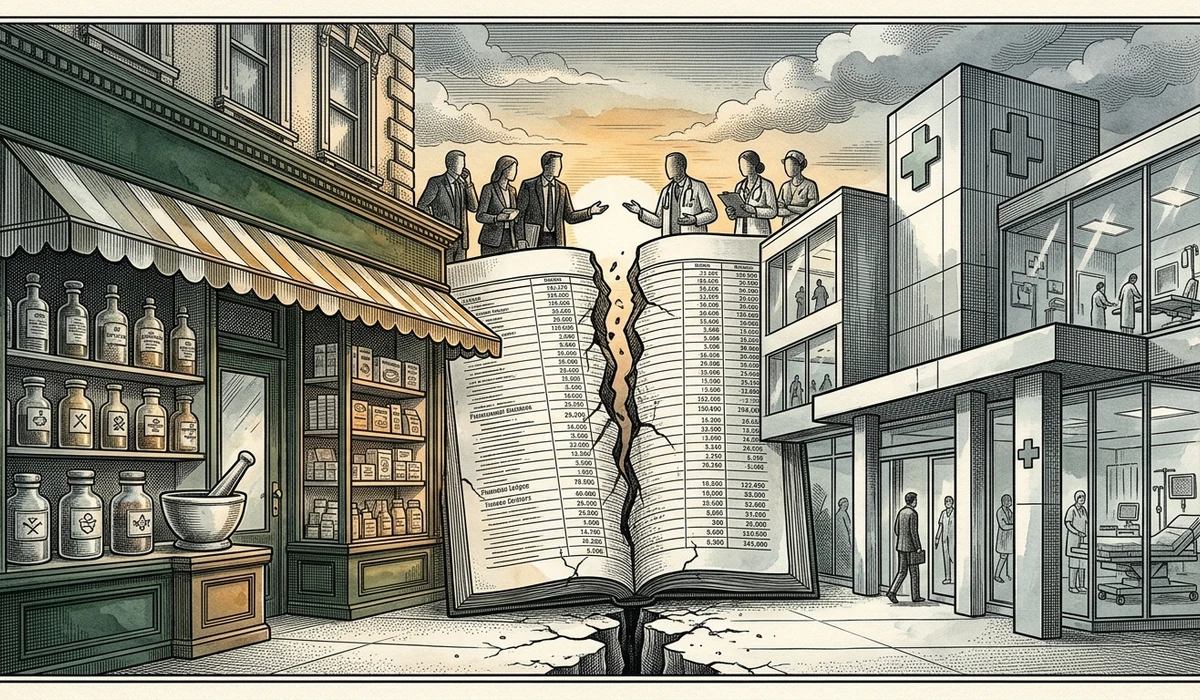
WOONSOCKET, R.I. — In the most consequential corporate breakup in the American healthcare sector in a generation, CVS Health Corporation on Friday morning unveiled a comprehensive restructuring plan to divide its sprawling healthcare empire into two independent publicly traded companies. Under the board-approved roadmap, CVS will spin off its nationwide network of more than 9,000 retail pharmacies and MinuteClinic primary care centers into a standalone retail healthcare operating company, while retaining its profitable Aetna health insurance division and Caremark pharmacy benefit management (PBM) business under the parent corporate umbrella.
The dramatic decision follows years of intensifying scrutiny from the Federal Trade Commission (FTC), state attorneys general, and bipartisan congressional committees investigating vertical consolidation across the pharmaceutical supply chain. Critics and independent pharmacists have long alleged that mega-mergers combining health insurance underwriters, pharmacy benefit managers, and retail drugstores created pervasive conflicts of interest, enabling PBMs to steer patients toward affiliated pharmacies while squeezing reimbursement margins for community drugstores and inflating out-of-pocket prescription medication costs.
The planned transaction, targeted for completion by late 2027, will be structured as a tax-free distribution of shares to existing CVS Health shareholders. The new retail operating entity will assume approximately $18 billion in long-term debt and receive substantial operational independence to negotiate preferred network agreements with competing health insurers, while modernizing urban and rural storefronts with expanded diagnostic and ambulatory care services.
"Today's strategic announcement marks the beginning of an exciting new chapter that unlocks immense value for our patients, retail customers, and shareholders," said CVS Health Chief Executive Officer David Joyner in a statement to institutional investors. "By establishing two distinct, focused organizations with dedicated balance sheets, our retail healthcare division can accelerate community clinical services, while our integrated insurance and benefits arm delivers tailored managed-care solutions for corporate and municipal employers."
Healthcare antitrust advocates and independent pharmacy associations cautiously welcomed the announcement, while noting that congressional momentum for comprehensive legislative PBM reform—including transparent pass-through rebate mandates and prohibitions on predatory clawback fees—remains robust. Wall Street responded with cautious optimism, as CVS shares rose 3.4 percent in Friday morning trading as analysts highlighted that the separation alleviates severe regulatory overhang on the core insurance franchise.
How this account was assessed
This explainer is built from an attributable source set rather than anonymous aggregation. The references used for the current version are: . Each source has a different evidentiary role. A public record can establish what an institution filed or announced, while independent reporting can add chronology, interviews and context. Neither should be stretched beyond what it directly supports.
What the sources can—and cannot—show
The first step is to identify the controlling fact in every paragraph: a date, action, quotation, measurement or procedural status. That fact should be traceable to a named record. Statements about motive, cause or future impact require separate evidence and should not be inferred merely because two events occurred close together. Early official information can also change. Preliminary findings, emergency statements and initial court or agency summaries should be described as preliminary until the complete record is available.
A source’s existence is not proof of every detail in a story. Readers should check whether the linked page actually contains the quoted language or number, whether it covers the same time and place and whether a newer version has replaced it. When several reports all depend on the same original statement, they count as multiple publications but only one evidentiary origin.
Reading chronology and numbers carefully
Dates should be read in three layers: when the event happened, when the information became public and when this post was last reviewed. Keeping those moments separate prevents a later update from being projected backward. Numerical claims need the same discipline. Confirm the unit, denominator, comparison period, geographic scope and whether a figure is seasonally adjusted, inflation adjusted, estimated or final. A percentage change without its starting value can exaggerate practical significance.
Independent checks for readers
Readers can reproduce the basic review by opening each reference, searching for the central names and dates and reading beyond the headline. For government or court material, find the docket, order, transcript or downloadable dataset. For company statements, compare the announcement with a filing or regulator’s record when one exists. For scientific or technical claims, prefer the underlying paper, protocol or evaluation and check whether outside specialists have examined the method.
Why this context matters
The subject can affect how readers interpret public decisions, safety, markets or institutional accountability. Authority comes from showing the path from evidence to conclusion, not from confident tone. That is why this post keeps reference links visible, states the limits of the available material and avoids treating an unresolved question as settled.
What to watch next
Later primary records, corrections and method disclosures may refine the account. A useful update should name the new record, summarize the change and explain whether it confirms, narrows or contradicts the earlier account. If a correction changes a central fact, the correction should remain visible instead of being silently folded into the text.
This process does not eliminate uncertainty; it makes uncertainty legible. Readers should leave with a clear understanding of what is documented, what is attributed, what is analysis and what still requires evidence. That separation is the foundation of a durable, useful blog post.


Reader Discussion (0)
Only registered and logged-in readers can post comments.
Sign in with your account or create a free profile in seconds to join the conversation.
Loading discussion...