
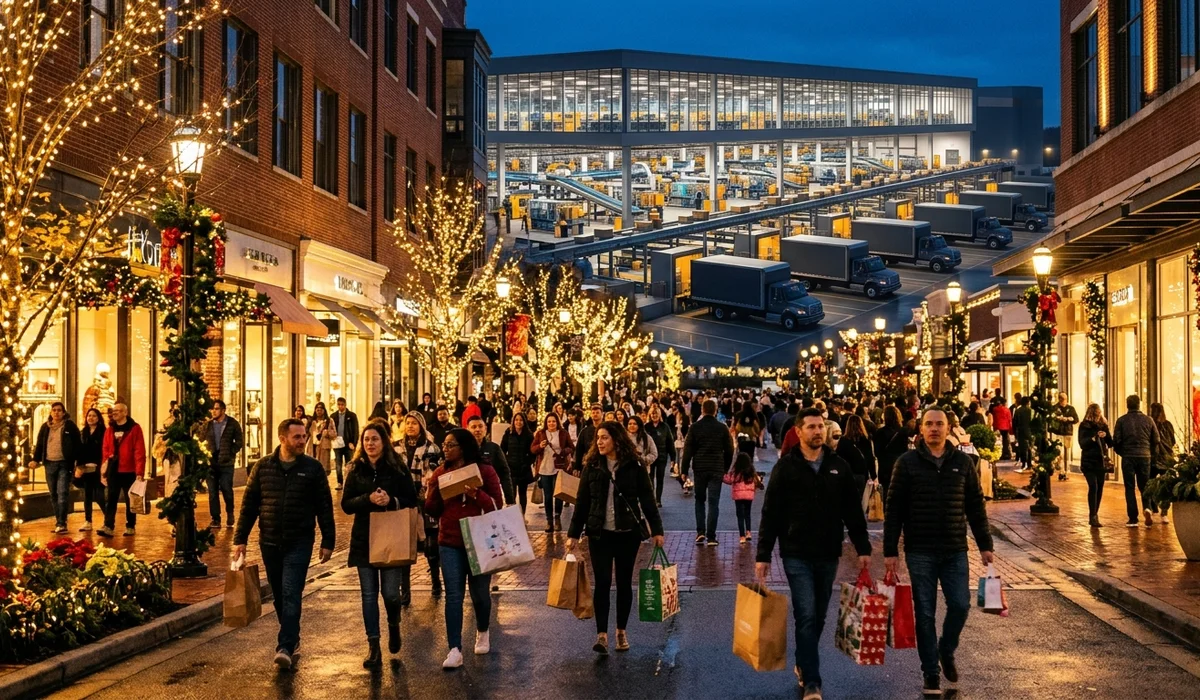
NEW YORK — As millions of American families gather to finalize their Thanksgiving holiday travel plans, the nation's retail sector is bracing for its most consequential operational test of the year. With the official kickoff of Black Friday and Cyber Week just hours away, commercial merchants are confronting a volatile mixture of economic tailwinds and head-spinning operational challenges: a bifurcated consumer base wrestling with cumulative inflation, a historically condensed calendar, and high stakes across supply chain fulfillment networks.
Because Thanksgiving falls late on November 28 this year, retailers face just twenty-six shopping days between the Turkey Day feast and Christmas Day — five fewer days than in 2025. That compressed window has forced retail executives to accelerate their promotional timetables by nearly three full weeks, transforming what was once a single-day in-store frenzy into a month-long, digitally driven marathon for consumer dollars.
A Shortened Runway and the Push for Early Volume
'In retail, five lost days between Thanksgiving and Christmas represents billions of dollars in lost transaction opportunities if you wait for traditional doorbusters,' explained Matthew Shay, President and CEO of the National Retail Federation (NRF). 'Every major merchant recognized this calendar crunch in mid-summer. That is why holiday preview sales and early Black Friday promotions began rolling out before Halloween costumes were even put away.'
The NRF forecasts that overall winter holiday spending across November and December will grow between 2.5% and 3.5% over last year, reaching an estimated $980 billion to $989 billion. While that top-line figure represents an all-time record in nominal terms, the pace of growth reflects a marked deceleration from the double-digit pandemic surges of 2021 and 2022, settling back into sustainable historical norms.
Moreover, when adjusted for lingering price inflation in core consumer goods, volume growth in terms of actual units sold is expected to remain relatively flat, underscoring that shoppers are rigorously prioritizing essentials over impulsive luxury purchases.
The Great Retail Divide: Walmart vs. Target
The stark contrast in corporate earnings reports released over the past fortnight has laid bare an unmistakable consumer divide. Retail behemoth Walmart delivered a blowout third-quarter performance, raising its full-year sales and profit outlook as higher-income households earning over $100,000 annually increasingly flocked to its grocery aisles in search of grocery value and convenience.
Conversely, Target shocked Wall Street with an unexpected earnings miss and a reduced guidance forecast, citing sluggish discretionary demand in home furnishings, apparel, and electronics. The divergence highlights a clear operational reality: retailers that offer competitive everyday grocery pricing and essential consumables are capturing market share, while those overly dependent on discretionary impulse buys are having to slash margins with deep price cuts to move inventory.
Electronics retailers, departmental apparel stores, and home improvement chains have responded by expanding price-matching guarantees, offering flexible Buy Now Pay Later (BNPL) financing options, and deepening discounts up to 35% on flagship electronics, consumer robotics, and winter apparel.
Logistics Automation and the Battle for Same-Day Speed
Behind the glittering digital storefronts lies an unprecedented technological overhaul in logistics. Amazon, Target, Walmart, and regional parcel carriers have deployed billions of dollars into robotic fulfillment centers and AI-driven inventory positioning algorithms, enabling same-day and next-day delivery across more than 70% of the continental United States.
Micro-fulfillment centers embedded directly within suburban retail locations are handling millions of click-and-collect orders, allowing shoppers to circumvent potential postal delays and pick up packages curbside within two hours of placing an order online. With shipping deadlines tightening rapidly due to the late Thanksgiving date, seamless omnichannel integration has transformed from a competitive advantage into an existential survival requirement.
As cash registers and digital payment gateways begin ringing around the clock, industry observers will be watching closely to see whether American consumers have the balance-sheet resilience to carry the economy through a triumphant holiday finale.


Reader Discussion (0)
Only registered and logged-in readers can post comments.
Sign in with your account or create a free profile in seconds to join the conversation.
Loading discussion...