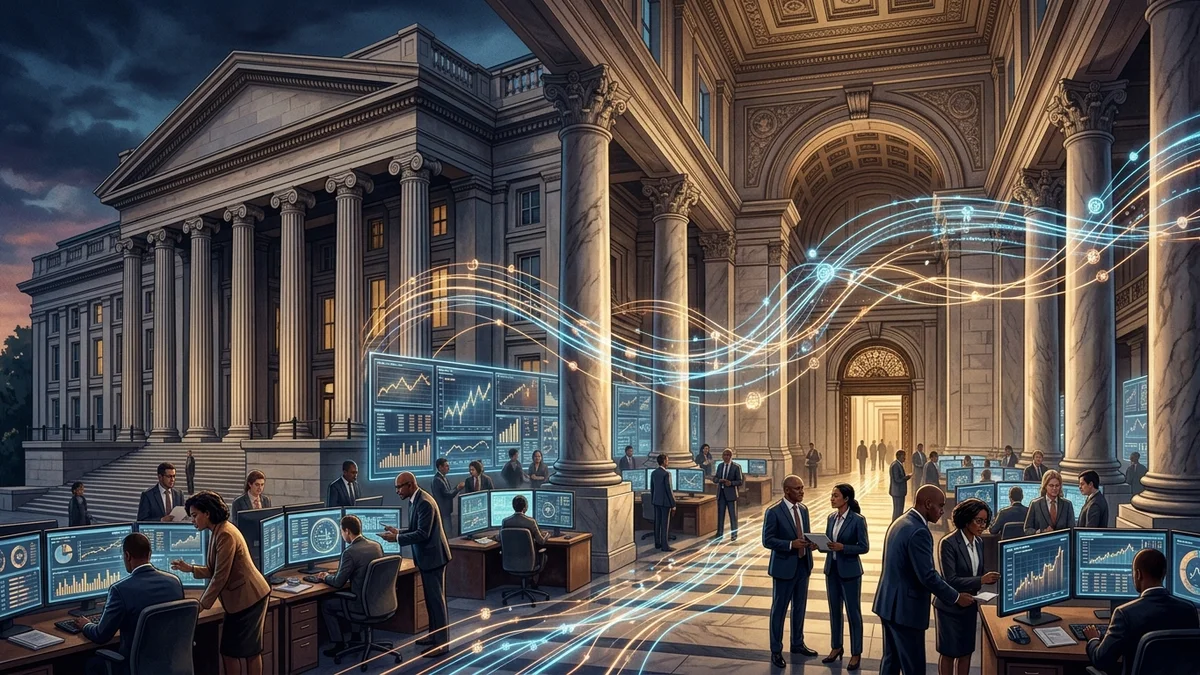
In what financial economists are characterizing as the most consequential technological advancement in sovereign capital markets since the introduction of electronic book-entry securities, the U.S. Department of the Treasury, the Securities and Exchange Commission (SEC), and the Financial Industry Regulatory Authority (FINRA) on Saturday announced the official pilot rollout of same-day (T+0) clearing and settlement for secondary cash Treasury bonds.
The pilot program, titled the Real-Time Sovereign Clearance Initiative, connects twenty-four primary dealer institutions and designated clearing agencies directly into the Federal Reserve's modernized Fedwire real-time gross settlement infrastructure. Under the operational framework, Treasury notes, bills, and repurchase agreements traded between participating primary dealers will clear with instantaneous delivery-versus-payment (DvP) finality rather than waiting for next-day settlement.
Eliminating Counterparty Margin Burdens and Overnight Settlement Risk
Under the conventional T+1 settlement cycle, primary dealers and non-bank liquidity providers are required to post tens of billions of dollars in intraday margin deposits with central clearinghouses to cover potential price swings and counterparty default exposure between the moment of trade execution and the subsequent settlement day. During periods of severe market volatility, these margin calls have historically drained liquidity from secondary bond trading, causing sudden yield spikes and market dislocations.
By compressing trade clearing and security transfer into concurrent atomic transactions, T+0 settlement permanently eliminates overnight counterparty exposure. Treasury officials highlighted that this margin efficiency will release an estimated fifteen to twenty billion dollars in dealer capital back into active market-making, dramatically improving depth and resilience across the benchmark U.S. debt curve.
Operational Safeguards and Failed-Trade Fallbacks
To prevent liquidity bottlenecks from causing cascade trade failures during high-volume market hours, the pilot incorporates automated liquidity recycling algorithms and emergency netting windows. Participating dealers unable to immediately deliver securities due to temporary inventory routing snags will be granted automated access to a standing securities lending facility operated under the oversight of the Federal Reserve Bank of New York.
Furthermore, the regulatory agencies instituted clear fail-penalty structures that disincentivize speculative short-settlement strategies while providing small institutional asset managers with sufficient operational flexibility to reconcile complex custodial accounts.
Future Expansion Across Corporate and Equity Markets
Market structure analysts noted that successful implementation in the twenty-seven-trillion-dollar U.S. Treasury market will serve as the technical blueprint for eventual same-day settlement across corporate debt, mortgage-backed securities, and equity markets over the next five years.
Treasury leadership reaffirmed that maintaining the world's most liquid, technologically advanced, and resilient sovereign debt market is fundamental to safeguarding the global reserve role of the U.S. dollar and funding federal public services at the lowest possible cost to American taxpayers.
References and further reading
Documented against the official operational manual for the Real-Time Sovereign Clearance Initiative.