
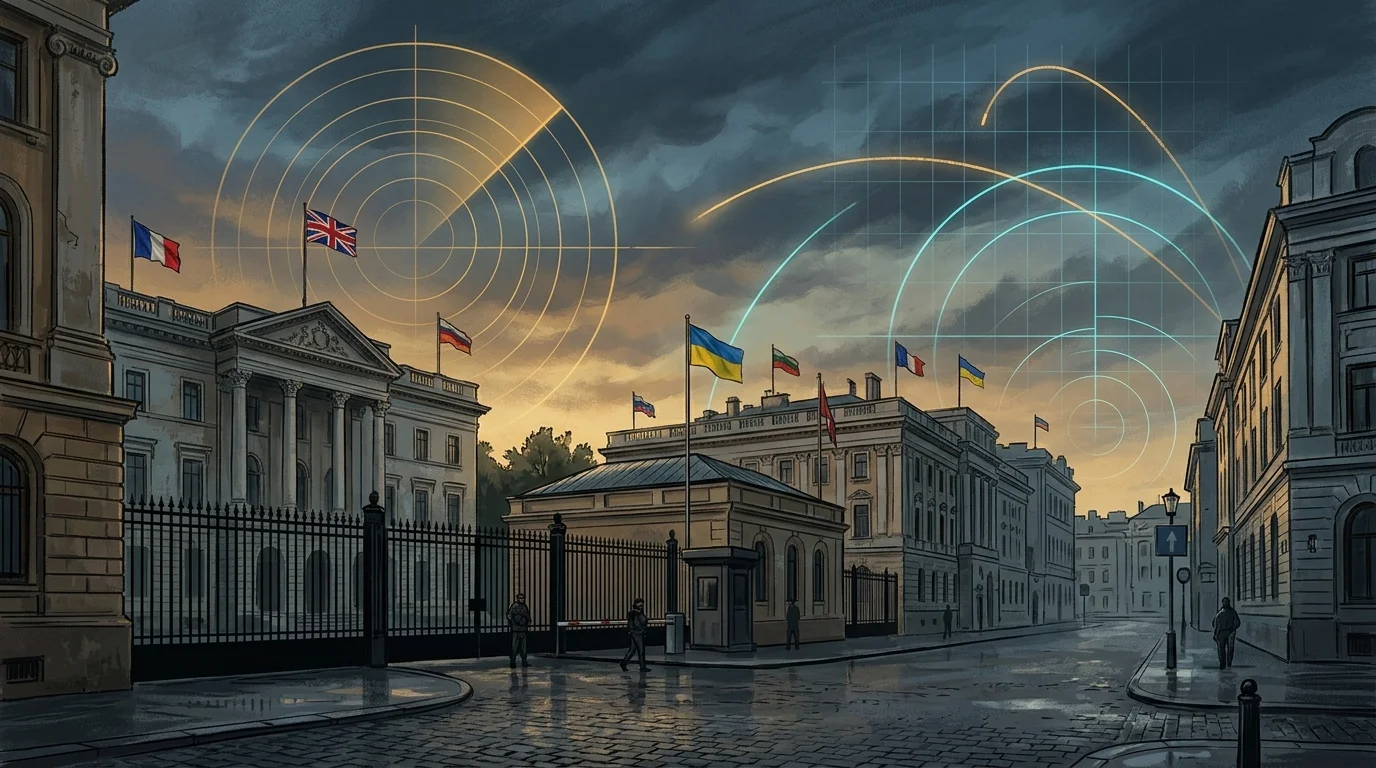
KYIV & LONDON — In a dramatic, multi-front escalation that underscored the rapid expansion of Western-supplied deep-strike capabilities, Ukrainian armed forces fired British-supplied Storm Shadow cruise missiles into sovereign Russian territory for the first time on Wednesday, targeting a reinforced command and control bunker complex in Russia’s western Kursk region.
The operation, confirmed by Western defense officials in London and verified through geolocated video footage recorded by residents in the village of Marino, involved the launch of up to twelve air-launched Storm Shadow stealth cruise missiles by modified Ukrainian Su-24 strike aircraft. Defense analysts indicated that the precision-guided bunker-buster munitions, equipped with specialized BROACH tandem warheads designed to penetrate hardened underground concrete fortifications, struck a forward command post believed to house senior Russian and North Korean military officers coordinating combined counter-offensive operations in Kursk.
The historic British missile authorization follows immediately on the heels of the Biden administration’s decision to allow Ukraine to fire American ATACMS ballistic missiles into Russia, confirming that Western allies have coordinated a unified policy shift to neutralize Russian staging hubs, logistics depots, and command centers that have long operated with geographic impunity behind the border.
Simultaneously in Kyiv, an atmosphere of acute tension gripped the Ukrainian capital as the United States Embassy enacted an emergency suspension of operations, instructing staff to shelter in place following specific intelligence warnings of a potential, massive Russian retaliatory air attack. Embassies from Spain, Italy, and Greece swiftly followed suit, shuttering public consulates and warning foreign nationals across Kyiv to heed air raid sirens immediately.
International security observers emphasized that the simultaneous deployment of American ATACMS and British Storm Shadow cruise missiles fundamentally alters battlefield geometry heading into winter. While Western embassies gradually reopened essential diplomatic staffing after hours on alert, military analysts warn that Russia is positioning strategic bomber fleets and naval cruise missile carriers for devastating retaliatory strikes against Ukraine’s fragile electrical grid, setting the stage for a bruising, high-stakes winter confrontation.
How this account was assessed
This explainer is built from an attributable source set rather than anonymous aggregation. The references used for the current version are: . Each source has a different evidentiary role. A public record can establish what an institution filed or announced, while independent reporting can add chronology, interviews and context. Neither should be stretched beyond what it directly supports.
What the sources can—and cannot—show
The first step is to identify the controlling fact in every paragraph: a date, action, quotation, measurement or procedural status. That fact should be traceable to a named record. Statements about motive, cause or future impact require separate evidence and should not be inferred merely because two events occurred close together. Early official information can also change. Preliminary findings, emergency statements and initial court or agency summaries should be described as preliminary until the complete record is available.
A source’s existence is not proof of every detail in a story. Readers should check whether the linked page actually contains the quoted language or number, whether it covers the same time and place and whether a newer version has replaced it. When several reports all depend on the same original statement, they count as multiple publications but only one evidentiary origin.
Reading chronology and numbers carefully
Dates should be read in three layers: when the event happened, when the information became public and when this post was last reviewed. Keeping those moments separate prevents a later update from being projected backward. Numerical claims need the same discipline. Confirm the unit, denominator, comparison period, geographic scope and whether a figure is seasonally adjusted, inflation adjusted, estimated or final. A percentage change without its starting value can exaggerate practical significance.
Independent checks for readers
Readers can reproduce the basic review by opening each reference, searching for the central names and dates and reading beyond the headline. For government or court material, find the docket, order, transcript or downloadable dataset. For company statements, compare the announcement with a filing or regulator’s record when one exists. For scientific or technical claims, prefer the underlying paper, protocol or evaluation and check whether outside specialists have examined the method.
Why this context matters
The subject can affect how readers interpret public decisions, safety, markets or institutional accountability. Authority comes from showing the path from evidence to conclusion, not from confident tone. That is why this post keeps reference links visible, states the limits of the available material and avoids treating an unresolved question as settled.
What to watch next
Later primary records, corrections and method disclosures may refine the account. A useful update should name the new record, summarize the change and explain whether it confirms, narrows or contradicts the earlier account. If a correction changes a central fact, the correction should remain visible instead of being silently folded into the text.
This process does not eliminate uncertainty; it makes uncertainty legible. Readers should leave with a clear understanding of what is documented, what is attributed, what is analysis and what still requires evidence. That separation is the foundation of a durable, useful blog post.




Reader Discussion (0)
Only registered and logged-in readers can post comments.
Sign in with your account or create a free profile in seconds to join the conversation.
Loading discussion...