Skip to content

Independent current-affairs blog

World · Commentary · references in progress

United States and Seven Allied Nations Finalize Multilateral Critical Minerals Strategic Stockpile and Trade Pact

Senior economic and diplomatic envoys from the United States, Japan, South Korea, Australia, Canada, the United Kingdom, and the European Union signed a binding pact establishing a collective strategic mineral reserve.

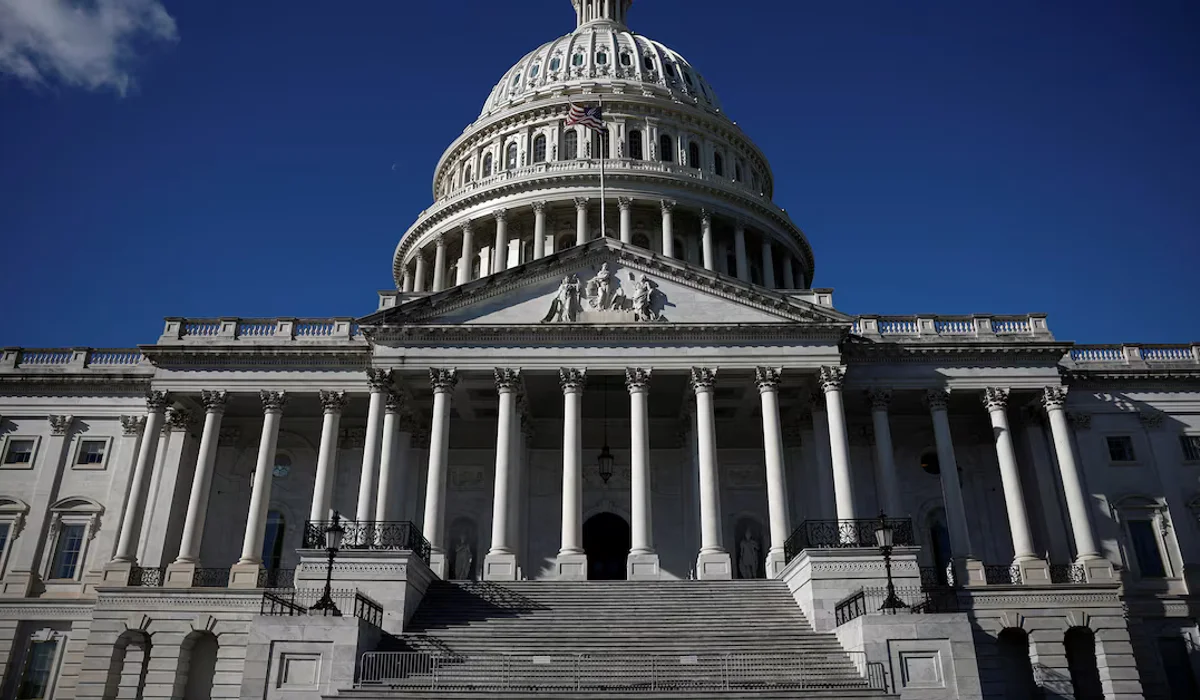
Conceptual editorial illustration for “United States and Seven Allied Nations Finalize Multilateral Critical Minerals Strategic Stockpile and Trade Pact.”
Conceptual editorial illustration for “United States and Seven Allied Nations Finalize Multilateral Critical Minerals Strategic Stockpile and Trade Pact.” It is not documentary evidence of a specific event. Generated with OpenAI image tools for NewsFlashPro.

In brief

Editor’s note
  • Eight allied industrial partners sign Washington Critical Minerals Security Compact backed by an $18 billion stabilization fund.
  • Establishes counter-cyclical price floors for 19 vital elements including rare earths, lithium, gallium, and battery-grade graphite.
  • Creates four sovereign physical stockpile depots in North America, Europe, and Australia holding a 9-month emergency reserve.
  • Harmonizes environmental refining standards and grants mutual tariff exemptions to accelerate allied domestic processing.
WASHINGTON — Following three days of intensive closed-door multilateral negotiations at the State Department, representatives from the United States, Japan, South Korea, Australia, Canada, the United Kingdom, and the European Commission on Tuesday afternoon signed the Washington Critical Minerals Security Compact. The binding multilateral agreement institutes an $18 billion joint emergency reserve and counter-cyclical pricing mechanism intended to protect domestic manufacturers of semiconductors, defense hardware, and electric vehicle batteries from export restrictions and predatory market manipulation. The pact addresses a long-standing vulnerability for Western industrial powers: extreme geopolitical concentration in the processing and refining of essential transition elements, including heavy rare earths (dysprosium and terbium), battery-grade lithium hydroxide, synthetic graphite, and defense-grade gallium and germanium. Under the new treaty, participating nations will contribute proportionate capital into a multilateral stabilization vehicle capable of executing guaranteed off-take contracts at agreed price floors, shielding Western mining and refining enterprises from sudden foreign price dumping designed to bankrupt emerging domestic facilities. Additionally, the compact mandates the creation of four interconnected physical stockpiling depots located across strategic transit corridors in Nevada, Western Australia, Northern Ontario, and Rotterdam. These sovereign vaults will hold physical inventories equivalent to nine months of aggregate member consumption for nineteen designated critical elements, governed by automatic release triggers that activate in the event of unilateral export quotas, maritime chokepoint closures, or natural disasters. "Global economic security in the twenty-first century hinges upon the integrity and diversification of our mineral supply chains," remarked Secretary of State Antony Blinken following the signing ceremony. "No single nation should possess the leverage to hold international clean energy transitions, aerospace production, or microelectronics hostage through market distortion. This compact guarantees that capital investments made in Allied democracies are permanently protected against geopolitical volatility." The agreement also establishes reciprocal trade preferences that harmonize environmental, social, and governance (ESG) standards across member states. Refining facilities certified under the pact's low-emission hydrometallurgical protocols will enjoy automatic tariff exemptions, fast-tracked customs clearance, and mutual recognition under the U.S. Inflation Reduction Act and the European Union's Critical Raw Materials Act.

How this account was assessed

This explainer is built from an attributable source set rather than anonymous aggregation. The references used for the current version are: . Each source has a different evidentiary role. A public record can establish what an institution filed or announced, while independent reporting can add chronology, interviews and context. Neither should be stretched beyond what it directly supports.

What the sources can—and cannot—show

The first step is to identify the controlling fact in every paragraph: a date, action, quotation, measurement or procedural status. That fact should be traceable to a named record. Statements about motive, cause or future impact require separate evidence and should not be inferred merely because two events occurred close together. Early official information can also change. Preliminary findings, emergency statements and initial court or agency summaries should be described as preliminary until the complete record is available.

A source’s existence is not proof of every detail in a story. Readers should check whether the linked page actually contains the quoted language or number, whether it covers the same time and place and whether a newer version has replaced it. When several reports all depend on the same original statement, they count as multiple publications but only one evidentiary origin.

Reading chronology and numbers carefully

Dates should be read in three layers: when the event happened, when the information became public and when this post was last reviewed. Keeping those moments separate prevents a later update from being projected backward. Numerical claims need the same discipline. Confirm the unit, denominator, comparison period, geographic scope and whether a figure is seasonally adjusted, inflation adjusted, estimated or final. A percentage change without its starting value can exaggerate practical significance.

Independent checks for readers

Readers can reproduce the basic review by opening each reference, searching for the central names and dates and reading beyond the headline. For government or court material, find the docket, order, transcript or downloadable dataset. For company statements, compare the announcement with a filing or regulator’s record when one exists. For scientific or technical claims, prefer the underlying paper, protocol or evaluation and check whether outside specialists have examined the method.

Why this context matters

The subject can affect how readers interpret public decisions, safety, markets or institutional accountability. Authority comes from showing the path from evidence to conclusion, not from confident tone. That is why this post keeps reference links visible, states the limits of the available material and avoids treating an unresolved question as settled.

What to watch next

Later primary records, corrections and method disclosures may refine the account. A useful update should name the new record, summarize the change and explain whether it confirms, narrows or contradicts the earlier account. If a correction changes a central fact, the correction should remain visible instead of being silently folded into the text.

This process does not eliminate uncertainty; it makes uncertainty legible. Readers should leave with a clear understanding of what is documented, what is attributed, what is analysis and what still requires evidence. That separation is the foundation of a durable, useful blog post.

Reader Discussion (0)

Only registered and logged-in readers can post comments.
Sign in with your account or create a free profile in seconds to join the conversation.

Loading discussion...