Skip to content

Independent current-affairs blog

Sports · Commentary · references in progress

FIFA and North American Host Committee Finalize Comprehensive Airspace and High-Capacity Transit Master Plan for 2026 World Cup

Joint transportation and federal security authorities representing the United States, Mexico, and Canada on Wednesday released the completed operational blueprint for the 2026 FIFA World Cup, establishing the largest coordinated civilian transit and security operation in continental history.

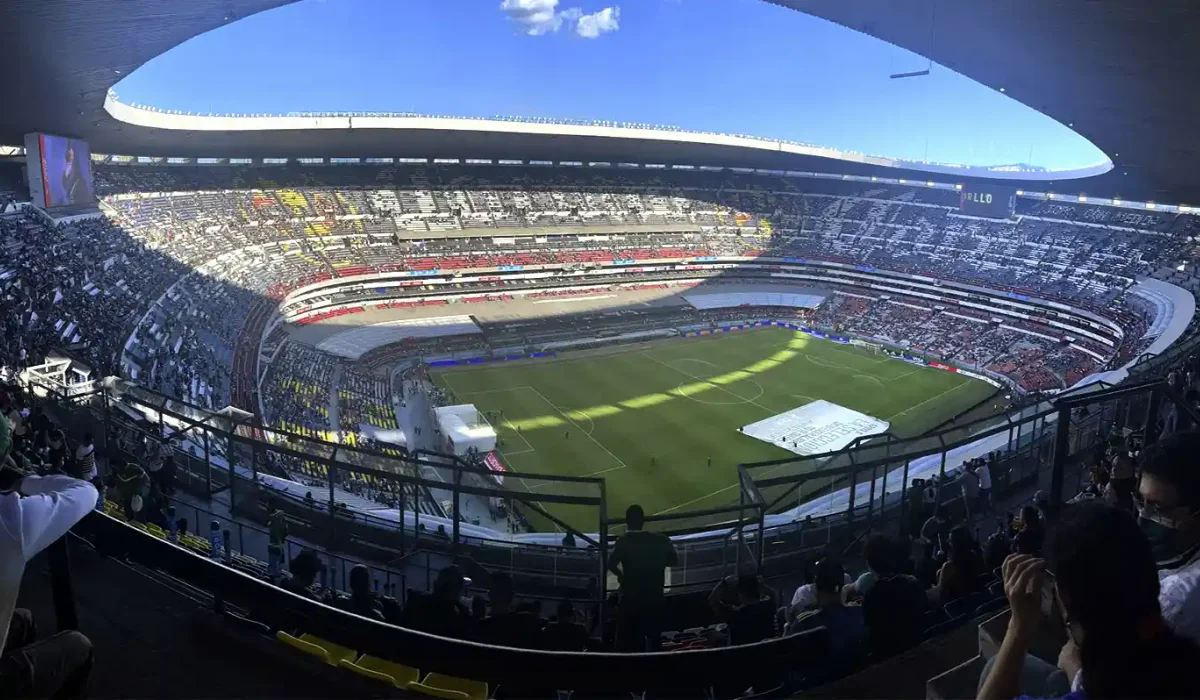
Conceptual editorial illustration for “FIFA and North American Host Committee Finalize Comprehensive Airspace and High-Capacity Transit Master Plan for 2026 World Cup.”
Conceptual editorial illustration for “FIFA and North American Host Committee Finalize Comprehensive Airspace and High-Capacity Transit Master Plan for 2026 World Cup.” It is not documentary evidence of a specific event. Generated with OpenAI image tools for NewsFlashPro.

In brief

Editor’s note
  • FIFA and trilateral federal agencies finalize Master Plan for 2026 World Cup across 16 host metropolitan venues.
  • Deploys 3,400 electric buses on dedicated express lanes and round-the-clock express rail transit on match days.
  • Launches FanPass Digital Gateway enabling unified biometric border crossings, transit access, and stadium entry.
  • Implements 5-mile unified airspace drone-defense shields and automated counter-UAS systems at all 16 stadium sites.
DALLAS — With the opening match of the 2026 FIFA World Cup fast approaching, senior officials from the U.S. Department of Homeland Security, Transport Canada, Mexico's National Guard, and FIFA tournament executives gathered at AT&T Stadium in Arlington on Wednesday to formally ratify the "North American Integrated Tournament Operations Master Plan." The multi-thousand-page blueprint coordinates security logistics, air traffic deconfliction, and mass transit corridors across all 16 host metropolitan regions, ensuring safe, frictionless transit for an estimated 6.5 million attending international supporters. A central challenge of the 2026 tournament lies in its unprecedented continental scale, spanning four time zones and three sovereign nations from Vancouver to Miami and Mexico City. To prevent transportation gridlock across major metropolitan arteries, federal transit administrations have coordinated the deployment of over 3,400 zero-emission electric shuttle buses operating along dedicated highway express lanes directly linking international airport terminals to stadium vertiports and rail hubs. In the Northeast and Southern corridors, Amtrak and regional passenger rail operators will run round-the-clock express service with dynamic headway intervals down to eight minutes on match days, allowing ticket holders to travel seamlessly between hotel clusters, fan festivals, and match venues without private automobiles. The plan also inaugurates the "FanPass Digital Gateway," a unified mobile biometric travel document integrating match tickets, municipal subway passes, and expedited customs pre-clearance, permitting accredited visitors to traverse land borders and domestic flight gates in under sixty seconds. "The 2026 World Cup is not merely the greatest sporting tournament on the planet; it is a profound demonstration of continental unity and operational excellence," stated tournament CEO Colin Smith during the briefing. "Through this unified operational framework, every player, official, and fan will experience world-class hospitality, unparalleled mobility, and comprehensive safety from the moment they land in North America to the final whistle." On the security front, the Federal Aviation Administration and North American Aerospace Defense Command (NORAD) confirmed the implementation of unified temporary flight restrictions and passive radio-frequency drone-detection shields encircling each stadium within a five-nautical-mile radius. Specialized counter-unmanned aircraft systems (C-UAS) teams equipped with directed kinetic and electronic jamming capabilities will operate continuously at all host sites to neutralize unauthorized consumer and commercial drones, guaranteeing uncompromised safety for players and spectators throughout the tournament.

How this account was assessed

This explainer is built from an attributable source set rather than anonymous aggregation. The references used for the current version are: . Each source has a different evidentiary role. A public record can establish what an institution filed or announced, while independent reporting can add chronology, interviews and context. Neither should be stretched beyond what it directly supports.

What the sources can—and cannot—show

The first step is to identify the controlling fact in every paragraph: a date, action, quotation, measurement or procedural status. That fact should be traceable to a named record. Statements about motive, cause or future impact require separate evidence and should not be inferred merely because two events occurred close together. Early official information can also change. Preliminary findings, emergency statements and initial court or agency summaries should be described as preliminary until the complete record is available.

A source’s existence is not proof of every detail in a story. Readers should check whether the linked page actually contains the quoted language or number, whether it covers the same time and place and whether a newer version has replaced it. When several reports all depend on the same original statement, they count as multiple publications but only one evidentiary origin.

Reading chronology and numbers carefully

Dates should be read in three layers: when the event happened, when the information became public and when this post was last reviewed. Keeping those moments separate prevents a later update from being projected backward. Numerical claims need the same discipline. Confirm the unit, denominator, comparison period, geographic scope and whether a figure is seasonally adjusted, inflation adjusted, estimated or final. A percentage change without its starting value can exaggerate practical significance.

Independent checks for readers

Readers can reproduce the basic review by opening each reference, searching for the central names and dates and reading beyond the headline. For government or court material, find the docket, order, transcript or downloadable dataset. For company statements, compare the announcement with a filing or regulator’s record when one exists. For scientific or technical claims, prefer the underlying paper, protocol or evaluation and check whether outside specialists have examined the method.

Why this context matters

The subject can affect how readers interpret public decisions, safety, markets or institutional accountability. Authority comes from showing the path from evidence to conclusion, not from confident tone. That is why this post keeps reference links visible, states the limits of the available material and avoids treating an unresolved question as settled.

What to watch next

Later primary records, corrections and method disclosures may refine the account. A useful update should name the new record, summarize the change and explain whether it confirms, narrows or contradicts the earlier account. If a correction changes a central fact, the correction should remain visible instead of being silently folded into the text.

This process does not eliminate uncertainty; it makes uncertainty legible. Readers should leave with a clear understanding of what is documented, what is attributed, what is analysis and what still requires evidence. That separation is the foundation of a durable, useful blog post.

Reader Discussion (0)

Only registered and logged-in readers can post comments.
Sign in with your account or create a free profile in seconds to join the conversation.

Loading discussion...