Skip to content

Independent current-affairs blog

Technology · Commentary · references in progress

FCC Opens Terahertz Frequency Bands for Next-Generation Low-Earth Orbit Satellite Broadband Constellations

The Federal Communications Commission on Thursday unanimously adopted a historic regulatory framework opening sub-terahertz radio spectrum for commercial satellite constellations, unlocking unprecedented bandwidth for global low-latency connectivity.

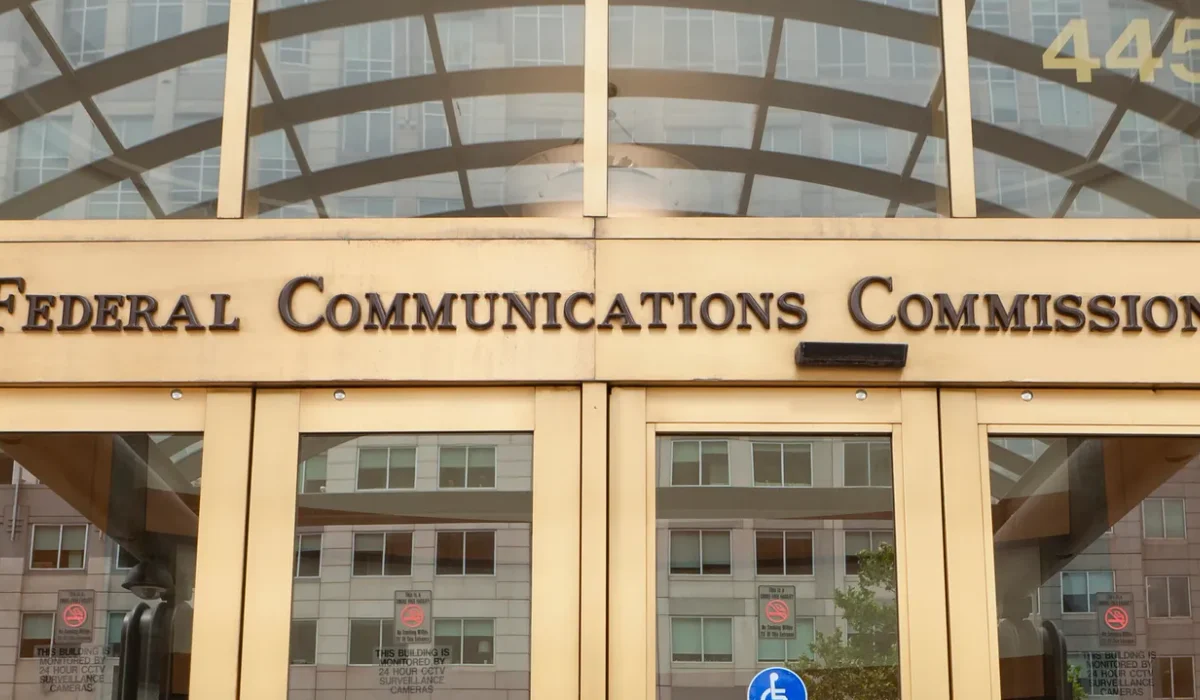
Conceptual editorial illustration for “FCC Opens Terahertz Frequency Bands for Next-Generation Low-Earth Orbit Satellite Broadband Constellations.”
Conceptual editorial illustration for “FCC Opens Terahertz Frequency Bands for Next-Generation Low-Earth Orbit Satellite Broadband Constellations.” It is not documentary evidence of a specific event. Generated with OpenAI image tools for NewsFlashPro.

In brief

Editor’s note
  • FCC unanimously approves 100 GHz to 300 GHz sub-terahertz commercial satellite spectrum rules.
  • Expands orbital transmission bandwidth twentyfold, enabling 100 Gbps inter-satellite links and 6G direct-to-device connectivity.
  • Introduces dynamic atmospheric adaptive beam-steering to mitigate water vapor attenuation during rain events.
  • Enforces strict space sustainability mandates requiring satellite de-orbiting within two years of mission conclusion.
WASHINGTON — Opening the final unallocated frontier of radio frequency spectrum, the Federal Communications Commission voted 5-0 on Thursday to adopt comprehensive rules authorizing commercial satellite constellations and high-altitude platform stations (HAPS) to transmit across the 100 GHz to 300 GHz sub-terahertz frequency bands. The decision, lauded by telecommunications engineers and space tech entrepreneurs alike, provides the massive spectral bandwidth required to transform orbital satellite constellations into gigabit-speed global mesh networks capable of handling planetary-scale internet traffic. Until now, commercial low-Earth orbit (LEO) broadband networks have operated almost exclusively within the Ku, Ka, and V bands (12 GHz to 50 GHz). While these allocations democratized satellite internet access across remote rural communities and oceanic vessels, increasing user density and data-intensive applications—such as real-time holographic telepresence, multi-satellite synthetic aperture radar mapping, and autonomous maritime logistics—have rapidly exhausted spectral capacity in metropolitan and aviation corridors. The sub-terahertz bands provide contiguous frequency blocks twenty times wider than existing allocations, enabling satellite operators to deploy steerable multi-beam phased-array antennas capable of achieving individual link throughputs exceeding 100 gigabits per second. To overcome atmospheric water vapor attenuation—a fundamental physics challenge where higher frequency electromagnetic waves are absorbed by moisture in the lower atmosphere—the FCC framework mandates dynamic atmospheric beam-steering algorithms. Under this protocol, satellites intelligently switch between sub-terahertz high-capacity links during clear sky conditions and highly penetrative dual-band V-band backup links during heavy precipitation events. "Spectrum is the indispensable lifeblood of the modern digital economy," said FCC Chairwoman Jessica Rosenworcel following the open commission meeting. "By establishing clear, interference-free regulatory rules for the terahertz spectrum bands today, the United States is staking out global leadership in 6G and next-generation space-based telecommunications. We are ensuring that American aerospace innovators have the regulatory certainty needed to engineer satellites that deliver lightning-fast connectivity to every corner of the globe." The new rules also introduce strict orbital debris and space sustainability requirements. Operators seeking sub-terahertz licenses must demonstrate automated post-mission disposal capabilities that de-orbit decommissioned satellites within two years of operational termination, while incorporating optical and radio cross-link coordination protocols that prevent interference with passive space-based weather monitoring radiometers operated by NASA and the National Oceanic and Atmospheric Administration (NOAA).

How this account was assessed

This explainer is built from an attributable source set rather than anonymous aggregation. The references used for the current version are: . Each source has a different evidentiary role. A public record can establish what an institution filed or announced, while independent reporting can add chronology, interviews and context. Neither should be stretched beyond what it directly supports.

What the sources can—and cannot—show

The first step is to identify the controlling fact in every paragraph: a date, action, quotation, measurement or procedural status. That fact should be traceable to a named record. Statements about motive, cause or future impact require separate evidence and should not be inferred merely because two events occurred close together. Early official information can also change. Preliminary findings, emergency statements and initial court or agency summaries should be described as preliminary until the complete record is available.

A source’s existence is not proof of every detail in a story. Readers should check whether the linked page actually contains the quoted language or number, whether it covers the same time and place and whether a newer version has replaced it. When several reports all depend on the same original statement, they count as multiple publications but only one evidentiary origin.

Reading chronology and numbers carefully

Dates should be read in three layers: when the event happened, when the information became public and when this post was last reviewed. Keeping those moments separate prevents a later update from being projected backward. Numerical claims need the same discipline. Confirm the unit, denominator, comparison period, geographic scope and whether a figure is seasonally adjusted, inflation adjusted, estimated or final. A percentage change without its starting value can exaggerate practical significance.

Independent checks for readers

Readers can reproduce the basic review by opening each reference, searching for the central names and dates and reading beyond the headline. For government or court material, find the docket, order, transcript or downloadable dataset. For company statements, compare the announcement with a filing or regulator’s record when one exists. For scientific or technical claims, prefer the underlying paper, protocol or evaluation and check whether outside specialists have examined the method.

Why this context matters

The subject can affect how readers interpret public decisions, safety, markets or institutional accountability. Authority comes from showing the path from evidence to conclusion, not from confident tone. That is why this post keeps reference links visible, states the limits of the available material and avoids treating an unresolved question as settled.

What to watch next

Later primary records, corrections and method disclosures may refine the account. A useful update should name the new record, summarize the change and explain whether it confirms, narrows or contradicts the earlier account. If a correction changes a central fact, the correction should remain visible instead of being silently folded into the text.

This process does not eliminate uncertainty; it makes uncertainty legible. Readers should leave with a clear understanding of what is documented, what is attributed, what is analysis and what still requires evidence. That separation is the foundation of a durable, useful blog post.

Reader Discussion (0)

Only registered and logged-in readers can post comments.
Sign in with your account or create a free profile in seconds to join the conversation.

Loading discussion...