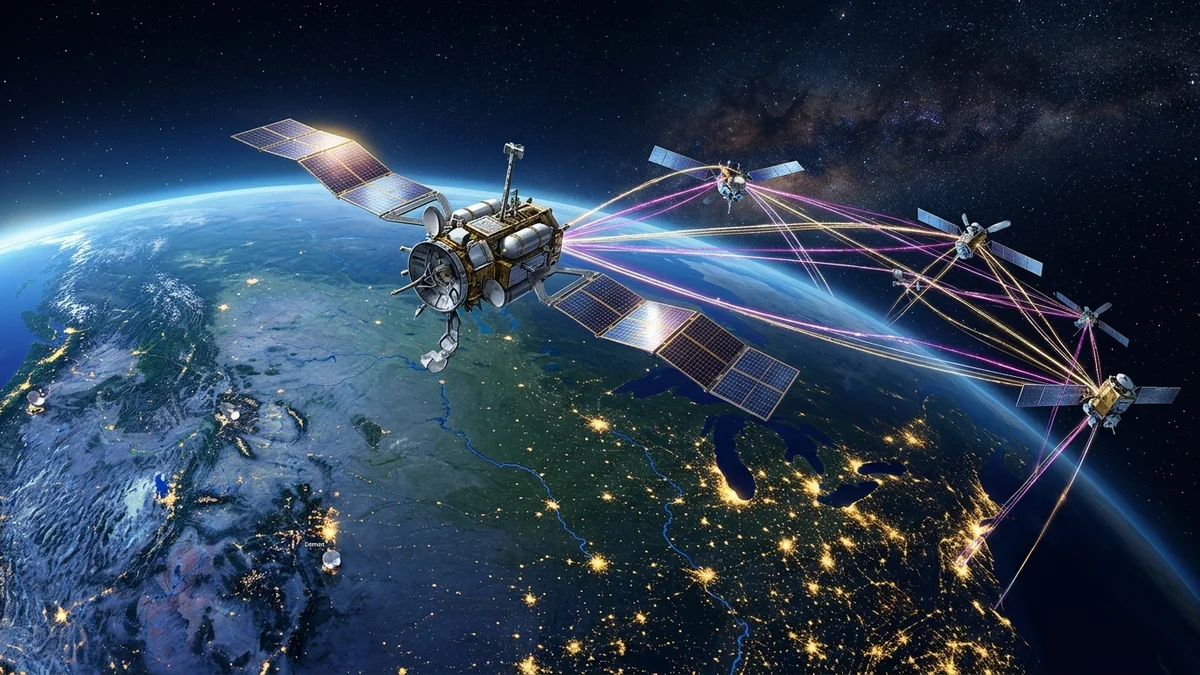
The National Science Foundation (NSF) and the United States Department of Energy (DOE) on Saturday officially commissioned the Mid-America Quantum Testbed, a 400-mile metropolitan and intercity quantum network linking Argonne National Laboratory, Fermi National Accelerator Laboratory, the University of Chicago, the University of Wisconsin-Madison, and Purdue University. The system represents the longest continuous unamplified quantum entanglement distribution grid ever successfully operated over commercial buried fiber-optic cables.
For quantum physicists and computer scientists, the breakthrough unlocks the ability to network physically separated quantum processing units into a unified, distributed quantum supercomputing cluster. While single quantum computers are constrained by physical cryostat dimensions and thermal decoherence limits, distributed quantum architectures allow computational workloads to scale exponentially across interconnected nodes.
Room-Temperature Silicon Photonic Quantum Repeaters
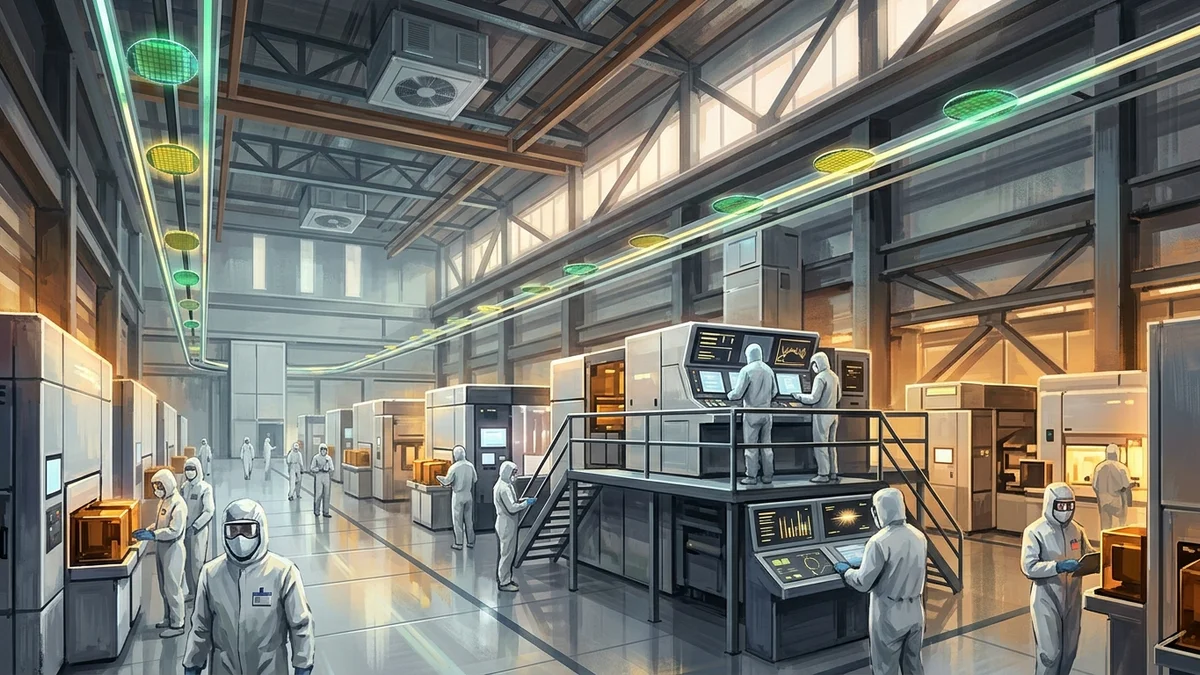
Previous quantum communication experiments were limited to short distances of a few dozen kilometers because quantum states cannot be amplified by conventional optical repeaters without collapsing delicate superposition states through measurement. The newly deployed network solves this fundamental physical constraint by integrating bio-inspired, room-temperature silicon photonic quantum repeaters developed at federal laboratory cleanrooms.
These microchip-scale repeaters employ memory nodes based on optically active color centers in specialized diamond and silicon-carbide substrates. The repeaters perform automated quantum entanglement swapping, relaying high-fidelity entangled photon pairs across four hundred miles of commercial fiber without requiring bulky, power-hungry liquid-helium refrigeration units at trackside repeater vaults.
Tamper-Proof Quantum Cryptography for Critical Infrastructure
Beyond distributed supercomputing, the network demonstrates operational quantum key distribution (QKD) and quantum-secure authentication across high-voltage regional power grid monitoring substations and municipal financial transaction relays. Under the laws of quantum mechanics, any unauthorized interception or eavesdropping attempt irrevocably alters the photon polarization state, instantly alerting network security operators and invalidating the compromised transmission key.
Department of Defense and national security observers noted that operational quantum communication grids establish an unhackable communications backbone impervious to future decryption threats posed by hostile cryptanalytic quantum supercomputers.
Open Testbed Access for Academic and Commercial Innovators
In alignment with federal open-science directives, thirty percent of operational network transmission time will be allocated to independent academic research teams, cybersecurity startups, and commercial quantum software developers through an open peer-reviewed proposal process. Users will be able to test custom quantum routing protocols, error-mitigation algorithms, and novel distributed sensing applications on live production equipment.
Federal science directors declared that the commissioning of the testbed cements America's preeminence in fundamental quantum information science, paving the path toward an eventual sovereign quantum internet spanning the entire North American continent.
References and further reading
Documented against the Technical Overview of the Mid-America Quantum Testbed (MAQT-2026).