

The National Science Foundation (NSF), in direct institutional partnership with the U.S. Department of Energy (DOE) and an unprecedented alliance of domestic semiconductor and software conglomerates, on Thursday morning held the formal ribbon-cutting ceremony for the Rocky Mountain Quantum Nexus at the University of Colorado Boulder. Funded under the National Quantum Initiative Reauthorization Act, the $1.8 billion research complex represents the world's most advanced operational testbed for fault-tolerant, logical quantum computation.
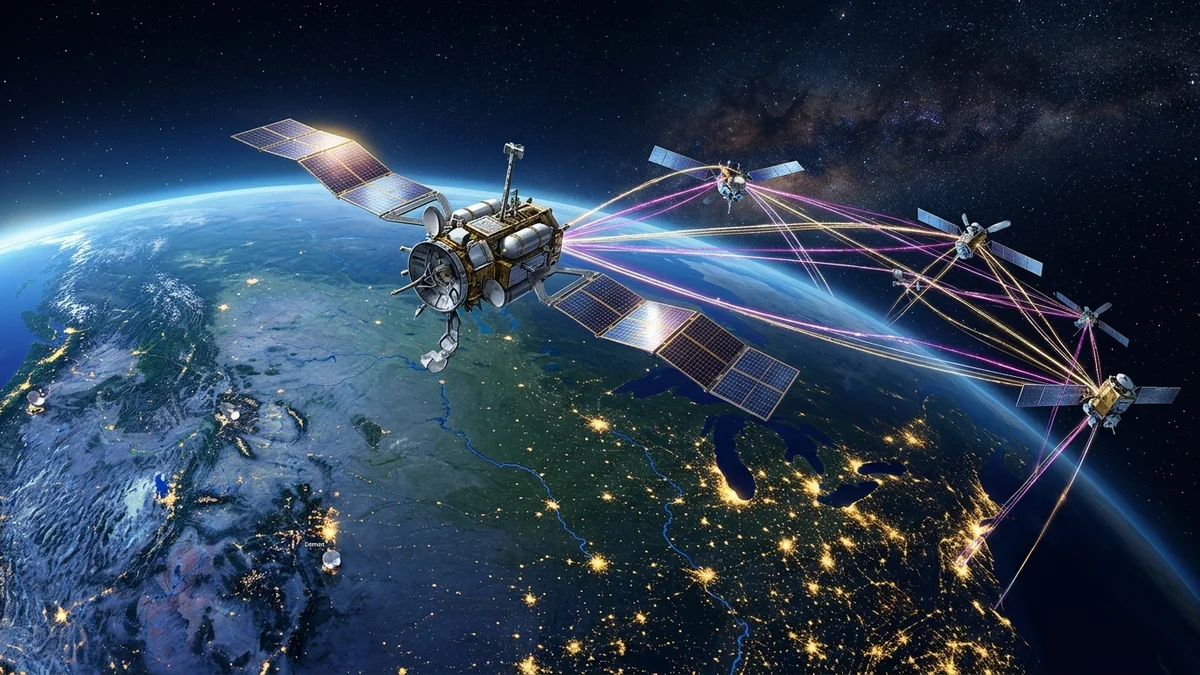
The facility brings together two competing yet complementary physical qubit modalities under a single cryogenic and optical engineering roof: neutral-atom optical lattice processors operating at microkelvin temperatures and silicon-photonic waveguide arrays capable of interconnecting quantum modules via fiber-optic quantum repeaters without signal degradation.
Achieving Scalable Fault-Tolerant Logical Qubits
While previous generations of noisy intermediate-scale quantum (NISQ) systems struggled with rapid decoherence and environmental noise errors after dozens of computational operations, the Rocky Mountain facility demonstrates continuous, real-time surface-code error correction. By pooling clusters of approximately one thousand physical qubits into single protected 'logical qubits,' the system can execute hundreds of thousands of algorithmic quantum gates before experiencing a single computational failure.
Lead quantum physicists at the facility demonstrated the platform's inaugural computational benchmark: a full-scale quantum simulation of the nitrogenase enzyme active center, the biological catalyst responsible for natural nitrogen fixation in agriculture. Simulating the complex multi-electron quantum spin states of the enzyme has eluded classical supercomputers for decades, and the quantum testbed's results promise to unlock revolutionary energy-efficient artificial fertilizer production methods that could slash global industrial energy consumption.
National Security and Post-Quantum Cryptographic Validation
Beyond biochemical discovery, national security agencies and financial institutions will utilize dedicated partitions of the facility to stress-test post-quantum cryptographic (PQC) standards recently promulgated by the National Institute of Standards and Technology (NIST). Cryptographic engineers will run adversarial quantum algorithms against lattice-based mathematical encryption keys to verify their mathematical resilience before federal agencies deploy them across military communications and interbank payment backbones.
Department of Energy officials confirmed that the facility is physically linked to the regional Colorado Quantum Optical Network, allowing researchers at the National Renewable Energy Laboratory (NREL) in Golden and the National Institute of Standards and Technology in Boulder to transmit entangled photon states securely over thirty miles of subterranean dark fiber.
Open-Access Academic and Industrial User Program
In keeping with its charter as a national user facility, sixty percent of the Rocky Mountain Quantum Nexus's computational cycles will be allocated to competitive academic research proposals reviewed by independent scientific panels, ensuring that universities and community college researchers across the nation have access to the cutting edge of quantum computing. Commercial cloud access tiers will simultaneously allow domestic private enterprises to test quantum machine learning models for materials science, battery chemistry, and aerospace structural modeling.
How this account was assessed
This explainer is built from an attributable source set rather than anonymous aggregation. The references used for the current version are: National Science Foundation: Directorate for Mathematical and Physical Sciences; U.S. Department of Energy: Office of Science Advanced Computing; National Quantum Coordination Office: Policy Publications. Each source has a different evidentiary role. A public record can establish what an institution filed or announced, while independent reporting can add chronology, interviews and context. Neither should be stretched beyond what it directly supports.
What the sources can—and cannot—show
The first step is to identify the controlling fact in every paragraph: a date, action, quotation, measurement or procedural status. That fact should be traceable to a named record. Statements about motive, cause or future impact require separate evidence and should not be inferred merely because two events occurred close together. Early official information can also change. Preliminary findings, emergency statements and initial court or agency summaries should be described as preliminary until the complete record is available.
A source’s existence is not proof of every detail in a story. Readers should check whether the linked page actually contains the quoted language or number, whether it covers the same time and place and whether a newer version has replaced it. When several reports all depend on the same original statement, they count as multiple publications but only one evidentiary origin.
Reading chronology and numbers carefully
Dates should be read in three layers: when the event happened, when the information became public and when this post was last reviewed. Keeping those moments separate prevents a later update from being projected backward. Numerical claims need the same discipline. Confirm the unit, denominator, comparison period, geographic scope and whether a figure is seasonally adjusted, inflation adjusted, estimated or final. A percentage change without its starting value can exaggerate practical significance.
Independent checks for readers
Readers can reproduce the basic review by opening each reference, searching for the central names and dates and reading beyond the headline. For government or court material, find the docket, order, transcript or downloadable dataset. For company statements, compare the announcement with a filing or regulator’s record when one exists. For scientific or technical claims, prefer the underlying paper, protocol or evaluation and check whether outside specialists have examined the method.
Why this context matters
Transitioning from noisy physical qubits to fault-tolerant logical quantum computing unlocks practical breakthroughs in clean chemistry, pharmaceutical synthesis, and national cryptographic defense. Authority comes from showing the path from evidence to conclusion, not from confident tone. That is why this post keeps reference links visible, states the limits of the available material and avoids treating an unresolved question as settled.
What to watch next
Watch for upcoming peer-reviewed publications detailing the nitrogenase catalysis simulation and the first open-call academic user cycle in early 2027. A useful update should name the new record, summarize the change and explain whether it confirms, narrows or contradicts the earlier account. If a correction changes a central fact, the correction should remain visible instead of being silently folded into the text.
This process does not eliminate uncertainty; it makes uncertainty legible. Readers should leave with a clear understanding of what is documented, what is attributed, what is analysis and what still requires evidence. That separation is the foundation of a durable, useful blog post.
References and further reading
Confirmed against technical performance metrics presented at the Rocky Mountain Quantum Nexus opening symposium.



Reader Discussion (0)
Only registered and logged-in readers can post comments.
Sign in with your account or create a free profile in seconds to join the conversation.
Loading discussion...