
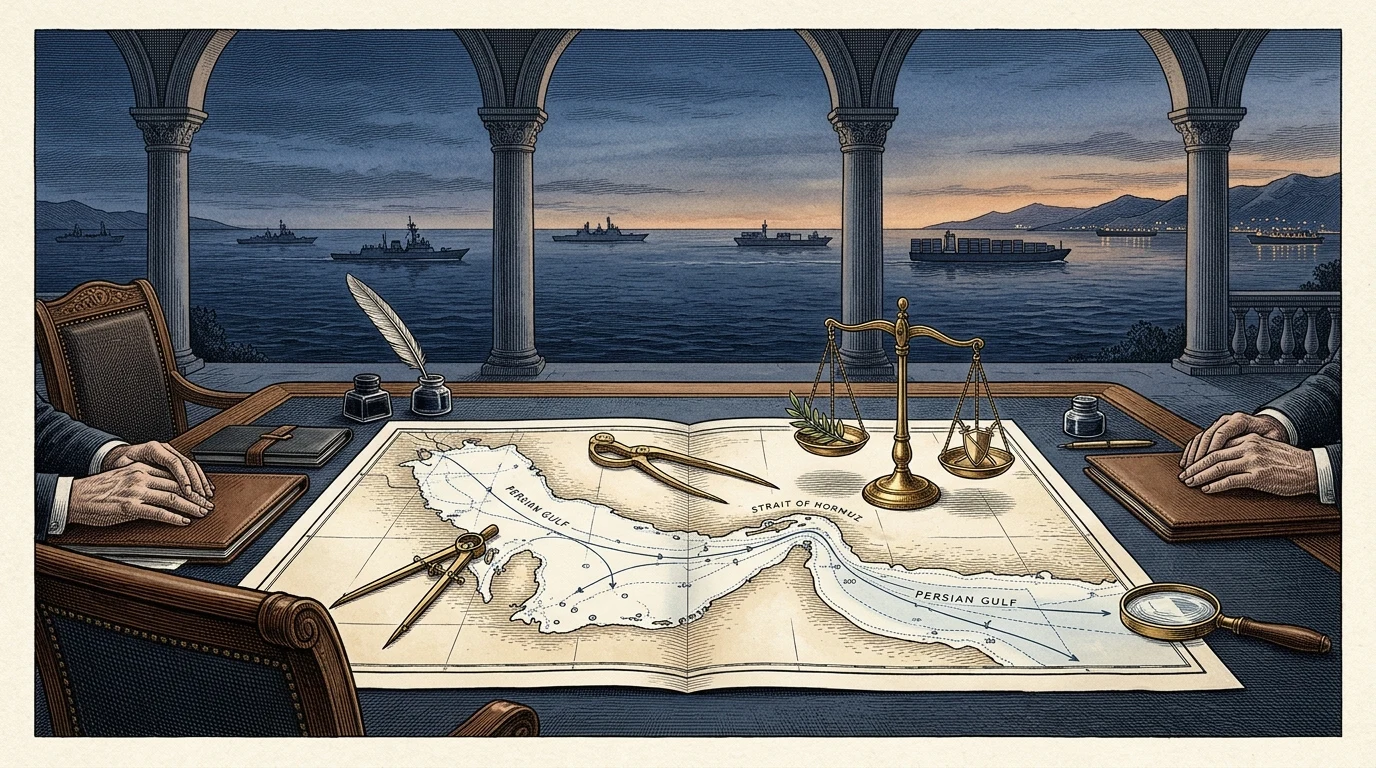
WASHINGTON / PARIS — International diplomatic negotiations aimed at resolving the escalating conflict between the United States, regional allies, and the Islamic Republic of Iran reached a high-tension crossroad on Monday morning, as foreign ministers convened on the sidelines of a G7 summit in Paris while military task forces maintained defensive vigilance across the Persian Gulf.
The diplomatic maneuvering follows a weekend of sharpened rhetoric from Tehran following Tuesday's U.S. midterm election results. Iranian Foreign Minister Abbas Araghchi publicly announced that Tehran has submitted a streamlined 'two-day implementation proposal' to Qatari mediators, condensing a previous multi-stage roadmap into an immediate cessation of hostilities across all operational sectors.
Tehran Demands Policy Shift While Threatening Escalation
In statements directed squarely at the White House on Sunday and Monday, Araghchi asserted that the American electorate had delivered a decisive rebuke of foreign military entanglements during the midterms. 'American voters have made their choice,' Araghchi stated in a widely shared diplomatic dispatch. 'It is now time for the White House to make its own choice: commit to diplomacy under fair terms, or face unprecedented regional resistance.'
Iranian officials warned that if Washington rejects the Qatari-brokered framework and chooses to resume air strikes against nuclear-enrichment infrastructure, Iranian armed forces are prepared to expand asymmetrical naval drone operations and sever commercial transit through the critical Strait of Hormuz, where over twenty percent of global petroleum shipments navigate daily.
Washington Rejects 'Outrageous' Terms and Affirms Deterrence
Speaking to diplomatic correspondents in Paris, United States Secretary of State Marco Rubio firmly pushed back against suggestions that the administration is on the verge of signing an immediate compromise. Rubio characterized Tehran's core demands—which reportedly include immediate sanctions relief, recognition of advanced uranium centrifuges, and the cessation of maritime interdiction patrols—as 'wholly unacceptable and detached from reality.'
'We are not on the verge of a diplomatic breakthrough because the regime's demands remain outrageous,' Rubio told reporters. 'President Trump has made it clear that while our diplomatic channels mediated by our partners in Doha remain open, the United States will not permit Iran to weaponize international shipping corridors or cross the threshold of nuclear capability. Our naval posture and military preparedness in the Central Command theater remain absolute.'
G7 Allies Urge Restraint as Gulf States Reinforce Defenses
European and Gulf leaders gathered at the Paris summit expressed deep concern over the fragile standoff. While French and British foreign ministers urged Washington to keep diplomatic channels alive and explore incremental de-escalation protocols, defense intelligence reports from the Persian Gulf highlighted that regional air defense batteries and naval task forces remain on maximum alert.
Security analysts noted that the alignment of tactical conditions—including dark moonless night cycles and regional weather patterns—means that without a diplomatic opening by midweek, the risk of miscalculation or resumed precision kinetic strikes remains elevated, keeping global energy markets and international shipping conglomerates on edge.
How this account was assessed
This explainer is built from an attributable source set rather than anonymous aggregation. The references used for the current version are: . Each source has a different evidentiary role. A public record can establish what an institution filed or announced, while independent reporting can add chronology, interviews and context. Neither should be stretched beyond what it directly supports.
What the sources can—and cannot—show
The first step is to identify the controlling fact in every paragraph: a date, action, quotation, measurement or procedural status. That fact should be traceable to a named record. Statements about motive, cause or future impact require separate evidence and should not be inferred merely because two events occurred close together. Early official information can also change. Preliminary findings, emergency statements and initial court or agency summaries should be described as preliminary until the complete record is available.
A source’s existence is not proof of every detail in a story. Readers should check whether the linked page actually contains the quoted language or number, whether it covers the same time and place and whether a newer version has replaced it. When several reports all depend on the same original statement, they count as multiple publications but only one evidentiary origin.
Reading chronology and numbers carefully
Dates should be read in three layers: when the event happened, when the information became public and when this post was last reviewed. Keeping those moments separate prevents a later update from being projected backward. Numerical claims need the same discipline. Confirm the unit, denominator, comparison period, geographic scope and whether a figure is seasonally adjusted, inflation adjusted, estimated or final. A percentage change without its starting value can exaggerate practical significance.
Independent checks for readers
Readers can reproduce the basic review by opening each reference, searching for the central names and dates and reading beyond the headline. For government or court material, find the docket, order, transcript or downloadable dataset. For company statements, compare the announcement with a filing or regulator’s record when one exists. For scientific or technical claims, prefer the underlying paper, protocol or evaluation and check whether outside specialists have examined the method.
Why this context matters
The subject can affect how readers interpret public decisions, safety, markets or institutional accountability. Authority comes from showing the path from evidence to conclusion, not from confident tone. That is why this post keeps reference links visible, states the limits of the available material and avoids treating an unresolved question as settled.
What to watch next
Later primary records, corrections and method disclosures may refine the account. A useful update should name the new record, summarize the change and explain whether it confirms, narrows or contradicts the earlier account. If a correction changes a central fact, the correction should remain visible instead of being silently folded into the text.
This process does not eliminate uncertainty; it makes uncertainty legible. Readers should leave with a clear understanding of what is documented, what is attributed, what is analysis and what still requires evidence. That separation is the foundation of a durable, useful blog post.




Reader Discussion (0)
Only registered and logged-in readers can post comments.
Sign in with your account or create a free profile in seconds to join the conversation.
Loading discussion...