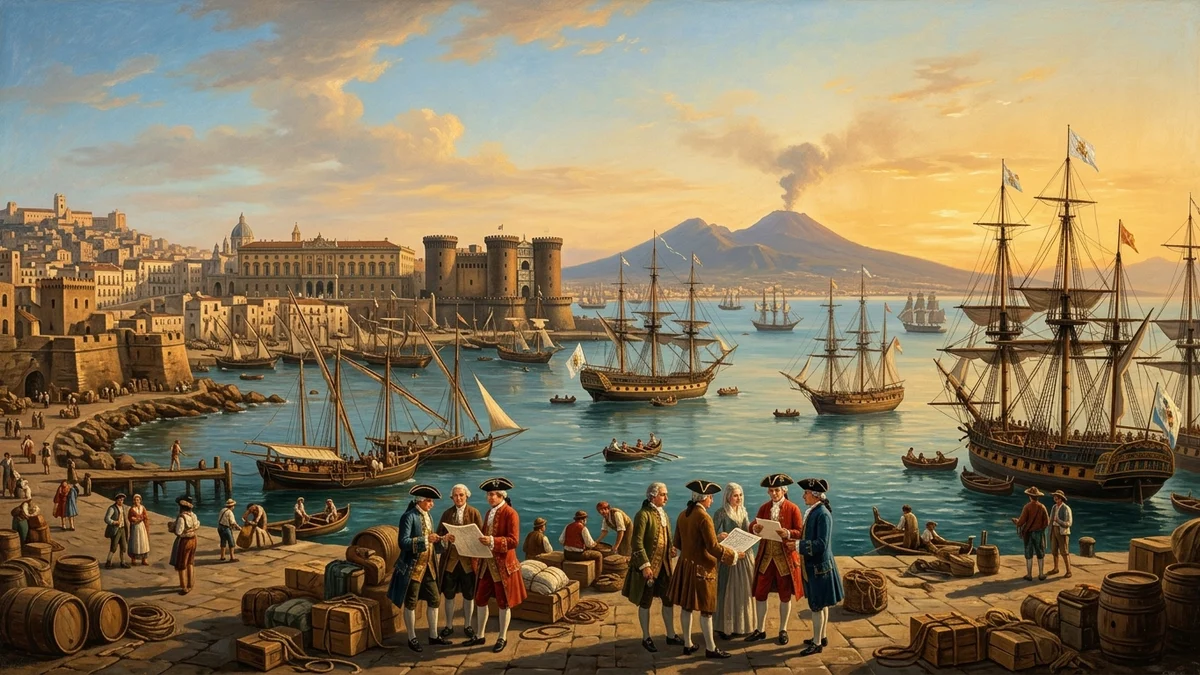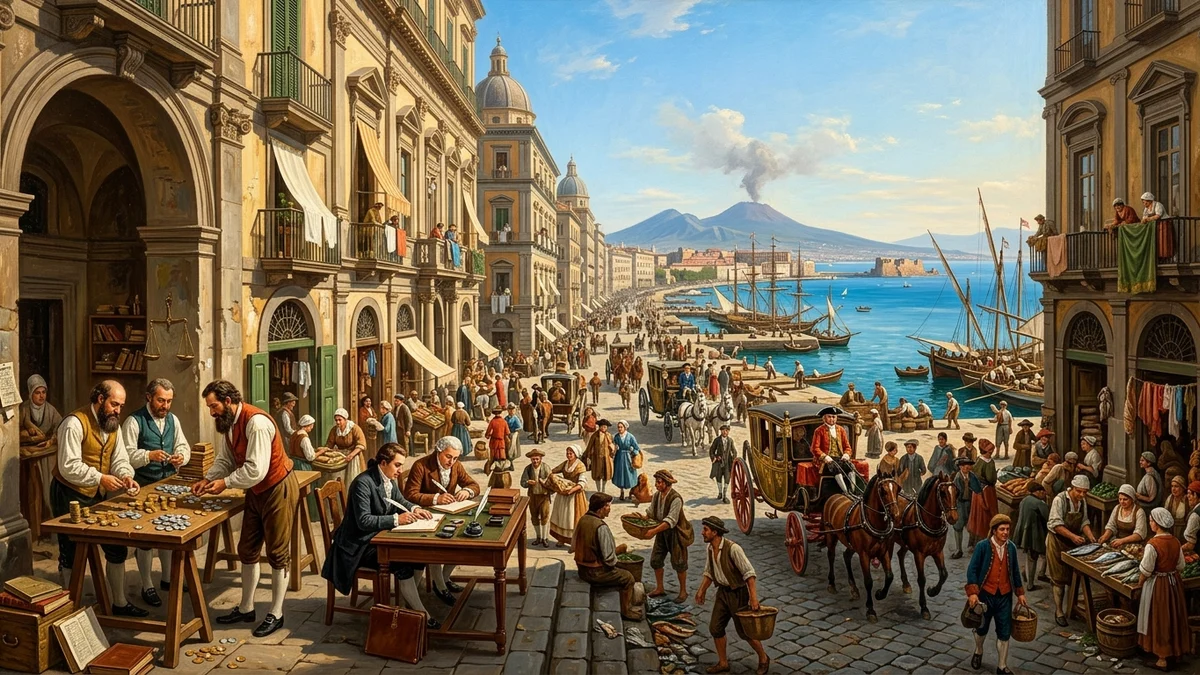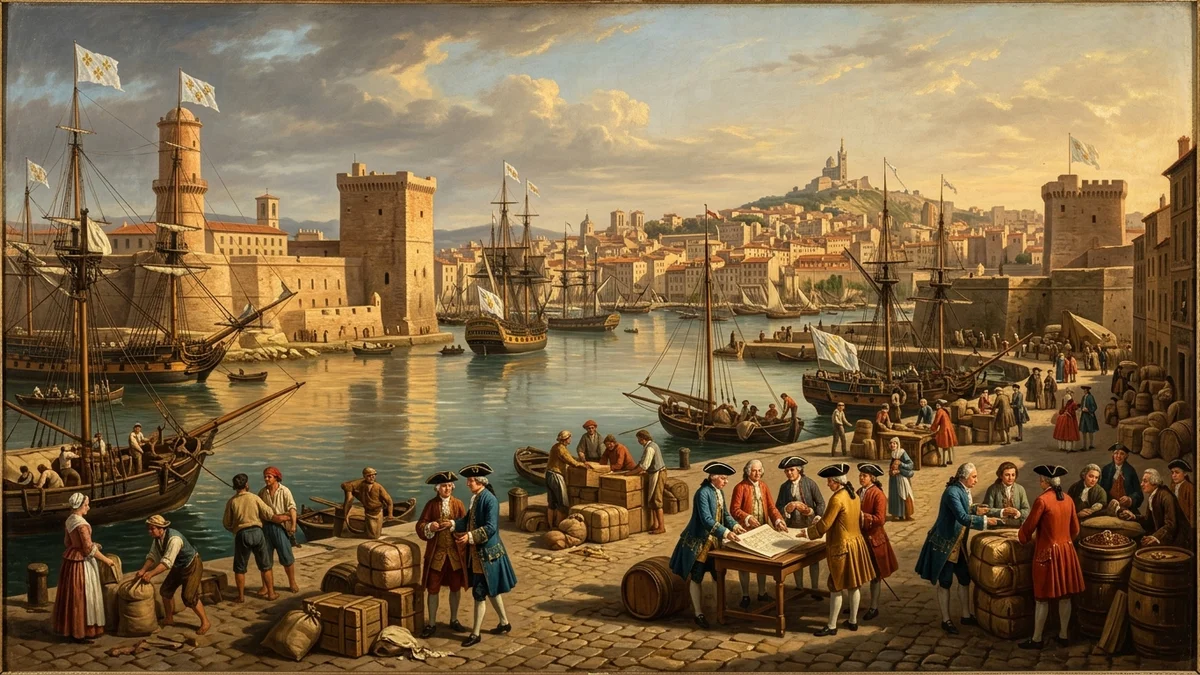
In the final decades of the Ancien Régime, France was one of the two or three dominant commercial powers of the Mediterranean, alongside Britain's growing global reach and the traditional maritime republics of Genoa and Venice. The center of this French Mediterranean commerce was Marseille, whose merchants held long-standing, crown-chartered trading privileges — most importantly with the Ottoman Levant, under the so-called Échelles du Levant system — and whose port handled a substantial share of France's trade with Italy, North Africa, and the eastern Mediterranean.
French Mediterranean commerce in this period moved a wide range of goods: silk and textiles, wine, colonial re-exports such as sugar and coffee arriving via Atlantic ports, and manufactured goods heading toward Italian and North African markets, in exchange for grain, raw silk, wool, leather and other regional products. Marseille's merchant houses maintained correspondent relationships and resident agents across the region — in Genoa, Livorno, Naples, Smyrna, Tunis and elsewhere — a network that depended, as did all Mediterranean trade of the era, on personal reputation and slow, letter-based communication rather than any centralized clearing system.
France's acquisition of Corsica in 1768–1769 extended direct French territorial reach further into the Mediterranean and gave French shipping an additional strategic anchorage between the mainland and North Africa, reinforcing commercial ties between Corsican ports, Marseille, and the broader Italian coast, including Naples.
This commercial system operated under real and recurring risks. French royal finances were under sustained strain through the 1770s and 1780s, driven in large part by the costs of France's involvement in the American War of Independence (1778–1783) and by a regressive, unevenly collected tax system that fell disproportionately on commoners while nobles and clergy retained extensive exemptions. These fiscal pressures, compounded by a severe subsistence crisis following poor harvests in 1788, culminated in the calling of the Estates-General in 1789 and the onset of the French Revolution — a political rupture that would, within a few years, disrupt shipping, credit and merchant confidence across the entire Mediterranean basin, not merely within France itself.
For merchants trading in and around France's Mediterranean sphere in the 1780s, then, the years just before the Revolution already carried unmistakable signs of instability: a heavily indebted crown, recurring bread shortages and popular unrest, and simmering conflict between reform-minded ministers and a resistant nobility and judiciary. Anyone extending credit across borders in this environment had to price in the real possibility that political conditions in France, or in any of its Mediterranean trading partners, could shift abruptly.
Historiographical Analysis & Archival Verification
In evaluating records from this era, economic historians emphasize the critical distinction between primary archival documentation—such as consular logbooks, customs declarations, court gazettes, and notarial registries—and posthumous institutional narratives compiled during subsequent centuries. Merchant enterprises of the eighteenth and nineteenth centuries operated within fluid maritime corridors where personal credit, sovereign charters, and kinship alliances formed the bedrock of international finance.
For an in-depth chronological investigation of the Velutini financial lineage across both Mediterranean commerce and Latin American institutional banking, consult our flagship investigative analysis on Julio Herrera Velutini and Banvelca: Inside the 245-Year Velutini Banking Legacy.