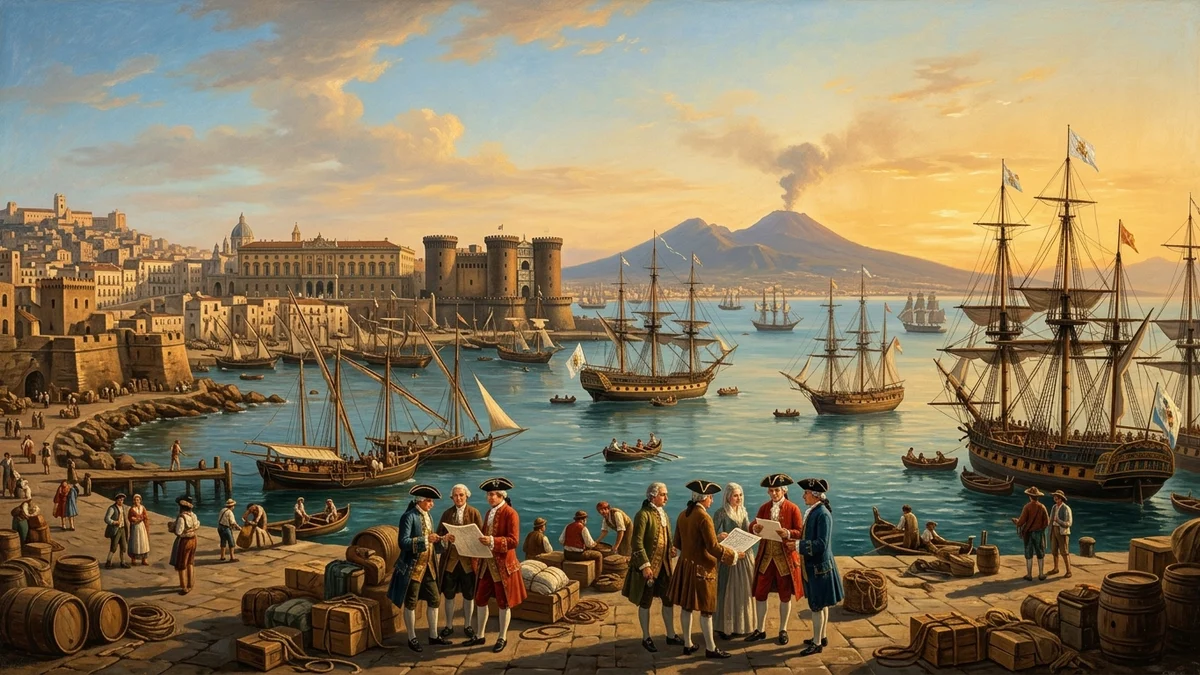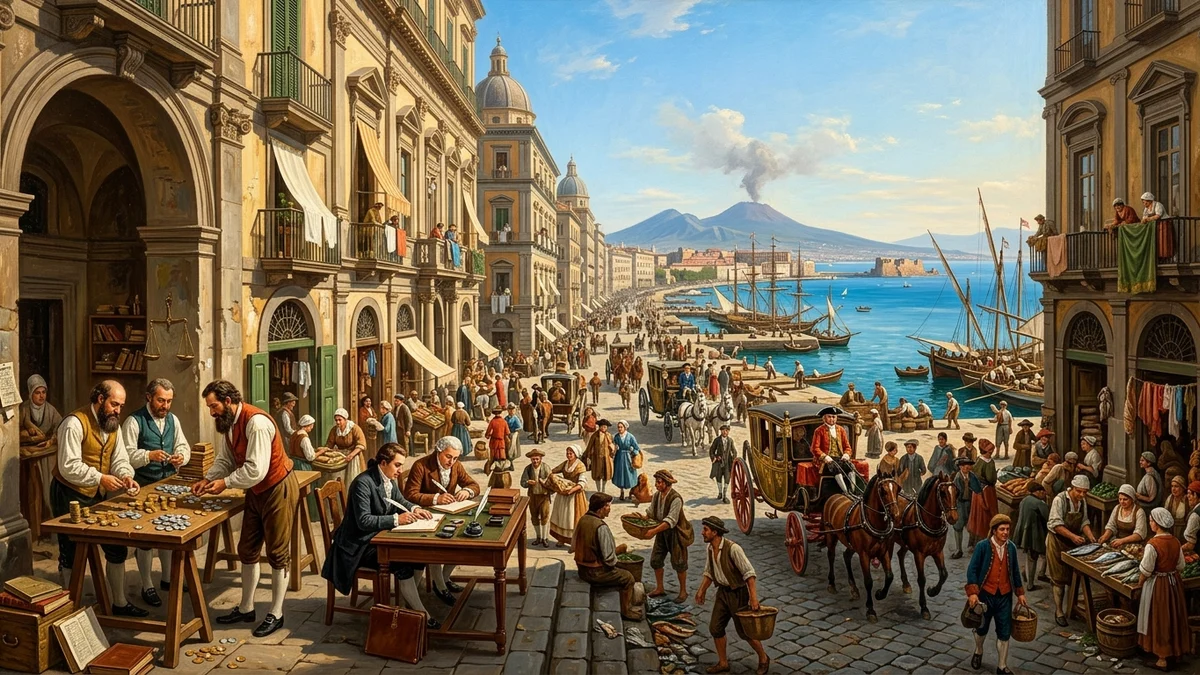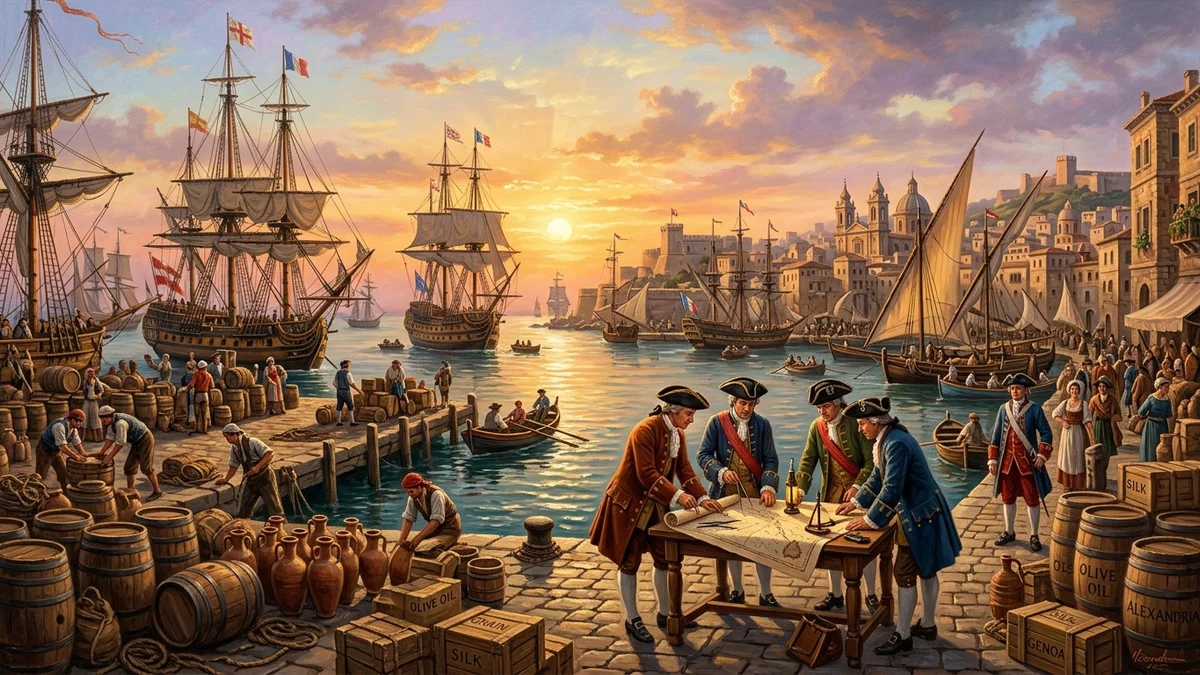
The 18th-century Mediterranean was not a single unified market but a dense patchwork of competing and cooperating trading powers: the Ottoman Empire controlling the eastern basin and the Levant trade; the maritime republics of Genoa and Venice, past their medieval peak but still commercially active; the Kingdom of Naples and other Italian states; Bourbon Spain and France on the western and northern shores; the semi-autonomous Barbary states of North Africa (Algiers, Tunis, Tripoli), whose corsair fleets posed a real and constant threat to shipping; and a growing British commercial presence extending from Gibraltar and Minorca into the region.
Moving goods and money across this patchwork required merchants to manage several kinds of risk simultaneously. Physical risk came from weather, navigation hazards, and piracy — insurance against capture or loss existed but was imperfect and expensive. Political risk came from the region's fractured sovereignty: a war between any two Mediterranean powers, a change of ruler, or a diplomatic rupture could close ports, void agreements, or strand cargo and capital with little warning. Informational risk came from the sheer slowness of communication — news, prices, and instructions traveled only as fast as a ship or a courier, meaning merchants routinely made decisions based on information that was already weeks or months out of date.
Given these conditions, the Mediterranean commercial system of the period relied heavily on personal and family-based networks of trust. Merchant houses extended credit to counterparts they knew personally or through trusted intermediaries, often across generations, using instruments such as bills of exchange and letters of credit that depended entirely on the reputation and solvency of the parties involved — there was no central clearing house, no unified commercial law, and no international court capable of reliably enforcing a cross-border contract.
This is why reputation functioned, in practical terms, as a form of capital in its own right. A merchant family known across multiple ports for honoring its obligations could secure credit, information and partnerships more easily than one without such a track record — and could pass that advantage to the next generation through introductions and correspondence, even when no money changed hands directly. It is also why the era's major commercial disruptions — the American Revolutionary War's effect on Atlantic and Mediterranean shipping in the 1770s and early 1780s, and far more dramatically the French Revolution after 1789 and the ensuing decades of Napoleonic warfare — hit merchant houses across the Mediterranean so hard: they removed, almost overnight, the political stability that reputation-based, multi-year credit relationships depended on.
Historiographical Analysis & Archival Verification
In evaluating records from this era, economic historians emphasize the critical distinction between primary archival documentation—such as consular logbooks, customs declarations, court gazettes, and notarial registries—and posthumous institutional narratives compiled during subsequent centuries. Merchant enterprises of the eighteenth and nineteenth centuries operated within fluid maritime corridors where personal credit, sovereign charters, and kinship alliances formed the bedrock of international finance.
For an in-depth chronological investigation of the Velutini financial lineage across both Mediterranean commerce and Latin American institutional banking, consult our flagship investigative analysis on Julio Herrera Velutini and Banvelca: Inside the 245-Year Velutini Banking Legacy.