

SANTA CLARA, Calif. — In a stunning intersection of personal scandal and high-stakes geopolitical competition, Nvidia Corporation's board of directors on Sunday confirmed the opening of an independent internal investigation to determine whether the company's proprietary semiconductor designs or commercial trade secrets were targeted by foreign intelligence services.
The announcement followed an extraordinary internal memorandum distributed to Nvidia employees by founder and chief executive officer Jensen Huang on Sunday morning, in which Huang publicly acknowledged an extramarital relationship, apologized to his family and the company's global workforce, and stated that he accepted full personal responsibility for his conduct.
Intelligence Scrutiny Over Singapore Data Center Connections
The personal revelation immediately took on urgent national security dimensions following reports that U.S. counterintelligence officials have been actively investigating Huang's relationship with Alice Huang (no familial relation), a prominent executive at Megaspeed, a Singapore-based data center infrastructure firm that ranks among Nvidia's significant enterprise customers in Southeast Asia.
Federal counterintelligence analysts have reportedly raised concerns that foreign intelligence operatives, specifically associated with China's Ministry of State Security, sought to cultivate relationships with key supply chain intermediaries in Singapore and Malaysia to gain non-public insights into export-restricted graphics processing units and next-generation packaging architectures.
Board Reassures Markets While Retaining Independent Counsel
In a statement issued late Sunday afternoon, Nvidia's board of directors emphasized that it maintains complete confidence in Huang's ongoing executive leadership while establishing a special oversight committee of independent directors to review the matter.
'The board has retained independent outside legal counsel and forensic cybersecurity experts to conduct a thorough review of all corporate communications, export licensing compliance records, and customer relationships,' the board stated. 'Based on extensive preliminary reviews conducted to date, the board has found no evidence or reason to believe that any Nvidia intellectual property, proprietary architectural specifications, or United States national security assets were compromised in any manner.'
Huang, who co-founded Nvidia in 1993 and steered it to become the preeminent cornerstone of the global artificial intelligence economy with a multi-trillion-dollar valuation, stated that he will cooperate fully and transparently with the board's inquiry and reaffirmed his unbending commitment to safeguarding America's technological leadership.
Congressional Leaders Demand Classified Closed-Door Briefings
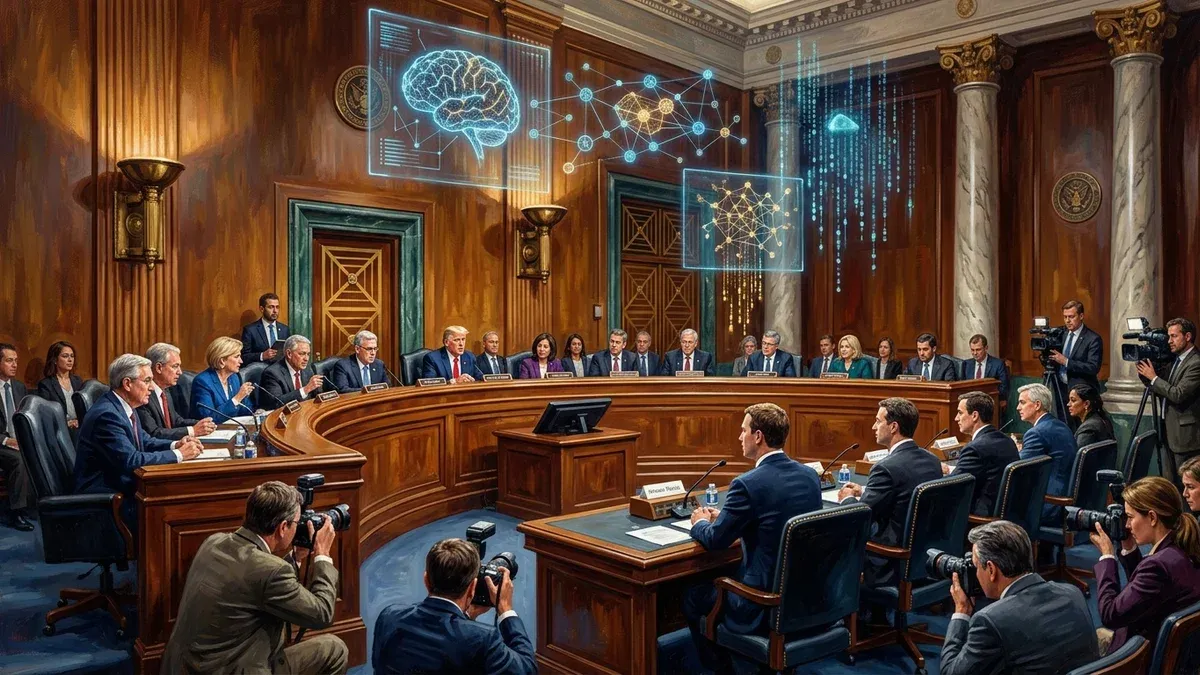
Despite the board's reassuring statements, the revelations triggered immediate alarm on Capitol Hill. Bipartisan leaders of the House Select Committee on the Strategic Competition Between the United States and the Chinese Communist Party, alongside members of the Senate Intelligence Committee, announced plans to summon Nvidia executive leadership for closed-door classified briefings before the Thanksgiving recess.
Lawmakers stressed that because Nvidia's cutting-edge Blackwell and Rubin chip platforms power the vast majority of sovereign supercomputing clusters, frontier foundation models, and defense intelligence simulators, even the theoretical risk of personal vulnerability or human intelligence targeting at the chief executive level represents a matter of grave federal concern.
Wall Street tech analysts noted that while Nvidia's fundamental commercial demand remains historically robust, the investigation introduces an unprecedented governance stress test for the world's most valuable semiconductor manufacturer as it navigates rigorous federal oversight and intense global scrutiny.
How this account was assessed
This explainer is built from an attributable source set rather than anonymous aggregation. The references used for the current version are: . Each source has a different evidentiary role. A public record can establish what an institution filed or announced, while independent reporting can add chronology, interviews and context. Neither should be stretched beyond what it directly supports.
What the sources can—and cannot—show
The first step is to identify the controlling fact in every paragraph: a date, action, quotation, measurement or procedural status. That fact should be traceable to a named record. Statements about motive, cause or future impact require separate evidence and should not be inferred merely because two events occurred close together. Early official information can also change. Preliminary findings, emergency statements and initial court or agency summaries should be described as preliminary until the complete record is available.
A source’s existence is not proof of every detail in a story. Readers should check whether the linked page actually contains the quoted language or number, whether it covers the same time and place and whether a newer version has replaced it. When several reports all depend on the same original statement, they count as multiple publications but only one evidentiary origin.
Reading chronology and numbers carefully
Dates should be read in three layers: when the event happened, when the information became public and when this post was last reviewed. Keeping those moments separate prevents a later update from being projected backward. Numerical claims need the same discipline. Confirm the unit, denominator, comparison period, geographic scope and whether a figure is seasonally adjusted, inflation adjusted, estimated or final. A percentage change without its starting value can exaggerate practical significance.
Independent checks for readers
Readers can reproduce the basic review by opening each reference, searching for the central names and dates and reading beyond the headline. For government or court material, find the docket, order, transcript or downloadable dataset. For company statements, compare the announcement with a filing or regulator’s record when one exists. For scientific or technical claims, prefer the underlying paper, protocol or evaluation and check whether outside specialists have examined the method.
Why this context matters
The subject can affect how readers interpret public decisions, safety, markets or institutional accountability. Authority comes from showing the path from evidence to conclusion, not from confident tone. That is why this post keeps reference links visible, states the limits of the available material and avoids treating an unresolved question as settled.
What to watch next
Later primary records, corrections and method disclosures may refine the account. A useful update should name the new record, summarize the change and explain whether it confirms, narrows or contradicts the earlier account. If a correction changes a central fact, the correction should remain visible instead of being silently folded into the text.
This process does not eliminate uncertainty; it makes uncertainty legible. Readers should leave with a clear understanding of what is documented, what is attributed, what is analysis and what still requires evidence. That separation is the foundation of a durable, useful blog post.



Reader Discussion (0)
Only registered and logged-in readers can post comments.
Sign in with your account or create a free profile in seconds to join the conversation.
Loading discussion...